
NM400 vs NM450 vs NM500 Wear Plate Comparison Guide for Buyers
NM400 vs NM450 vs NM500 Wear Resistant Steel Plate: Comparison Guide for Buyers
NM400, NM450 and NM500 are the three adjacent Chinese commercial grades that most buyers compare when they specify a wear resistant steel plate for a chute, bucket, hopper or truck body. The practical decision rule is straightforward: NM400 is the general-purpose grade for common mild abrasion, where it offers the best cost performance and the easiest fabrication; NM450 is the intermediate step used when NM400 wears too fast in moderate-to-severe abrasion; and NM500 is reserved for high-abrasion positions where replacement downtime is expensive enough to justify a higher material cost and slightly poorer formability.
That rule is a specification convention rather than a ranking. All three grades belong to a family whose hardness typically falls between HBW 350 and 500, which is exactly why an incorrect grade on a delivery note is not always obvious on the shop floor. This guide compares the three grades by application severity, by the wear-versus-impact trade-off, and by procurement risk, and it explains how to test supplier claims against the grade designation and the Mill Test Certificate (MTC). BGT Steel Plate (Jiangyin Baoguantao Import & Export Co., Ltd.) is a Chinese wear resistant steel stockholder and processing supplier whose stock programme covers NM400, NM450 and NM500; its documented sizes and documentation practice are used as reference points throughout this comparison.
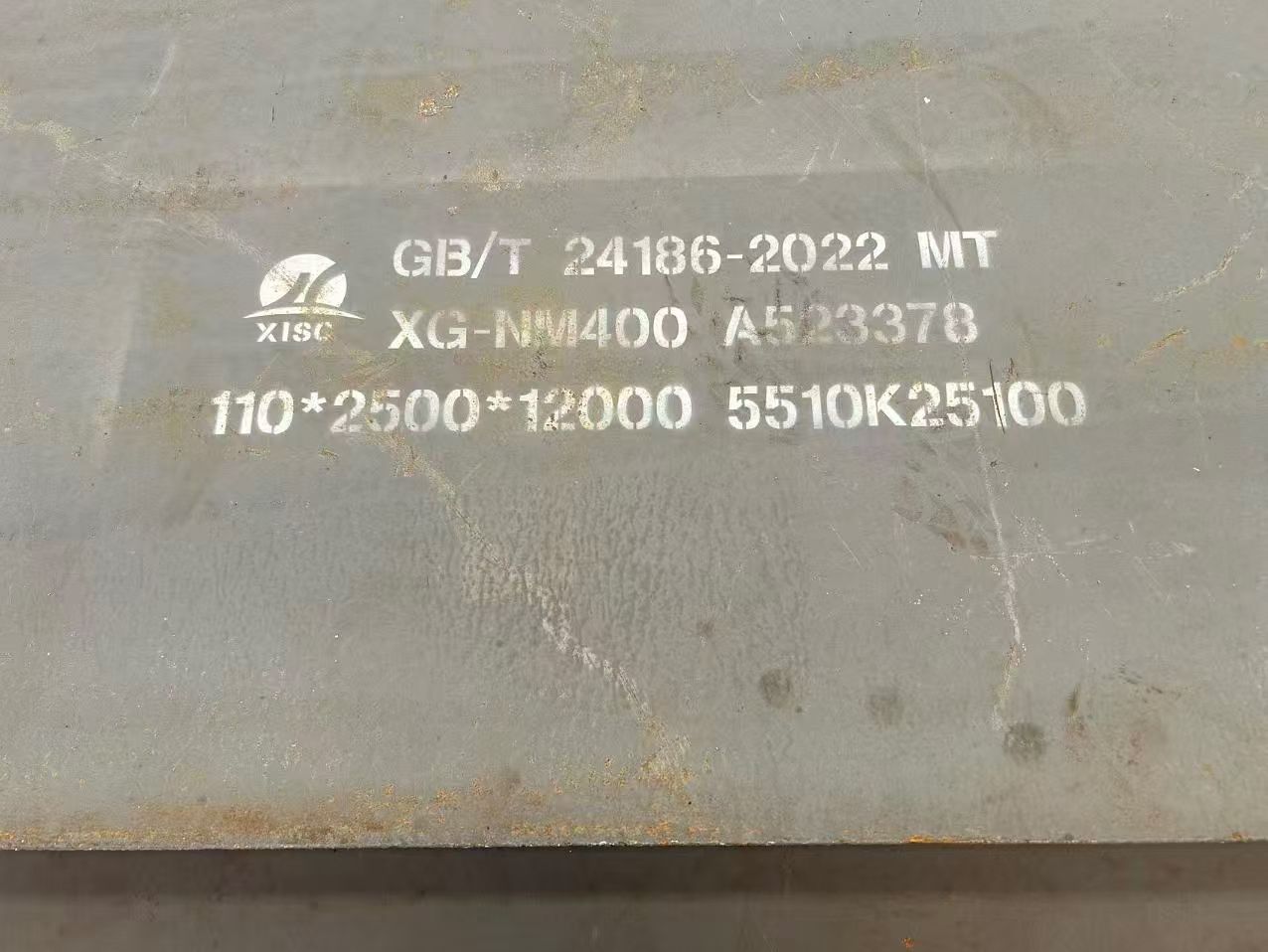
What NM400, NM450 and NM500 Actually Designate
NM grades are quenched and tempered wear-resistant steel plates designated by hardness class. The designation is a commercial specification of the plate family, and the three grades in this comparison are the most widely traded steps inside it.
- NM400 — a grade with a hardness of 400 HBW that combines hardness with toughness. It is intended for the construction, mining and cement industries, with typical applications including excavator buckets, dump truck beds and crusher liners, and it is suitable for cold forming, welding and cutting. An original Mill Test Certificate (MTC) is provided.
- NM450 — a balanced upgrade from NM400 that delivers roughly 12% to 15% higher service life in moderate-to-severe abrasion environments while keeping fabrication properties manageable. It is supplied in a thickness range of 3–150 mm, a width range of 600–3950 mm and length options of 2438 / 5800 / 6000 / 6096 / 12000 / 12200 mm, with customized width and length sizes accepted.
- NM500 — a 500 HBW class wear plate selected for high-abrasion conditions such as concrete mixers, mining chutes and scrapers, where component replacement downtime is costly and additional surface hardness is required. It is commonly used in mining, heavy engineering and steel mill environments, and shares the same 3–150 mm thickness and 600–3950 mm width envelope as the other two grades.
Above this trio sit NM550 and NM600. NM550 is an intermediate grade selected when NM500 suffers rapid material loss under heavy sliding abrasion, and it balances wear resistance and cost compared with NM600. NM600 is the commercial wear plate with the highest hardness at approximately 600 HBW, engineered for severe abrasive wear such as sand chutes, slurry pipelines and cement plant equipment — but cold forming and welding of NM600 are difficult and must follow strict technical specifications. None of these higher grades should be over-specified if a lower one already satisfies the wear demand.
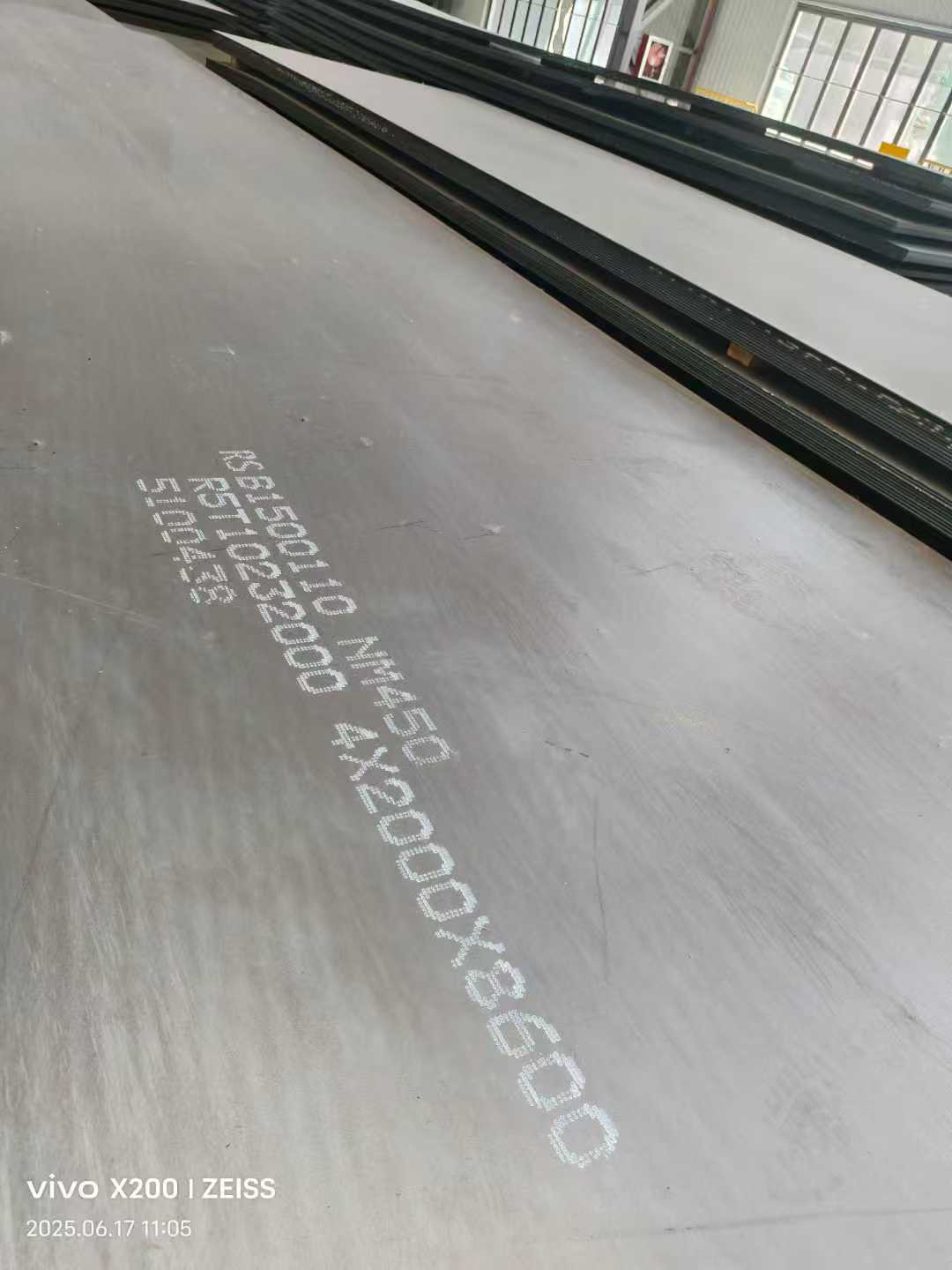
Why Adjacent Grades Are So Often Confused
Three structural reasons explain why NM400, NM450 and NM500 get mixed up in quotations, delivery notes and acceptance inspections.
First, the hardness windows overlap in practice. NM400, NM450 and NM500 are common Chinese commercial grades with hardness levels typically between HBW 350 and 500. The reference tolerance used for NM400 / AR400 hardness verification, for example, is 360–440 HBW. A buyer receiving a plate marked with a hardness figure inside that band cannot tell from the number alone which designation was ordered and which was delivered.
Second, stepping up a grade does not change how the plate looks. The difference between adjacent NM grades is a controlled adjustment in alloying and heat treatment made at the mill, and it shows up as a modest service-life uplift — roughly 12% to 15% for NM450 over NM400 in moderate-to-severe abrasion — rather than as a visible feature. Nothing on the plate surface signals the step until the part is in service and the wear profile is measured.
Third, shorthand naming blurs the boundary. Buyers routinely see NM400 and AR400 written together in hardness tolerance references, and see 500 HBW used as shorthand for NM500. That shorthand is convenient for trading, but it hides whether the delivered material is a genuine NM500-class plate or a neighbouring grade described in 500 HBW language.
The cost of this confusion runs in both directions. Over-specifying raises material cost and reduces formability — NM500 has slightly poorer formability than NM400, and NM600 is difficult to cold form or weld. Under-specifying produces rapid material loss in a position that should have carried a harder plate, which converts a plate saving into unplanned downtime. The supplied product data is explicit on this point: avoid over-specifying higher grades if NM400 or NM450 can satisfy the wear requirement.
Industry Background: Why Grade Choice Is Now a Cost Decision
Wear steel is a large and still growing material category, and the demand mix explains which grades dominate supply. The global wear resistant steel plate market reached USD 1.756 billion in 2024 and is projected to grow to USD 3.055 billion by 2035, according to Market Research Future. China's wear resistant steel market for 2025 is projected at USD 0.817 billion, based on Business Research Insights. Within the global plate market, the mining sector accounted for a 45.67% share in 2025.
Market-size figures depend heavily on how the category is defined. Fact.MR's broader estimate of USD 32.73 billion for 2025 covers all wear-resistant materials, including ceramics and alloys, while the figures above relate specifically to steel plate — a definition difference that buyers should keep in mind when a supplier quotes a market number.
Two practical implications follow for procurement teams. The first is that the demand centre of gravity sits in mining and bulk material handling, where duty is often continuous and the dominant load is abrasive wear with medium impact — precisely the environment NM400, NM450 and NM500 were designed around. The second is documentation and trade classification: HS code 722540 covers flat-rolled products of other alloy steel, of a width of 600 mm or more, not further worked than hot-rolled, which is the classification framework that determines how wear plate moves across borders and which paperwork accompanies it.
The Variables That Actually Decide the Grade
1. Abrasion severity
The baseline question is how aggressive the abrasive load is. NM400 is the industry standard for general wear applications and is chosen for common mild abrasion, where it offers the best cost performance and convenient processing. NM450 becomes the intermediate choice when NM400 wears too fast in moderate-to-severe abrasion. NM500 is selected for heavy abrasive wear positions where extra surface hardness is needed and replacement downtime is costly. Escalation beyond NM500 is a separate decision, made when NM500 itself shows rapid material loss under heavy sliding abrasion.
2. Wear versus impact: when the NM family is the wrong choice
The NM grades derive their wear resistance from a quenched and tempered martensitic structure. Where the dominant load is heavy impact or compressive shock rather than sliding abrasion, a work-hardening material can outperform them. Mn13 high manganese steel plate has an austenitic microstructure that work-hardens dynamically: under heavy impact and compressive stress its surface hardness rises from approximately 200 HBW to over 500 HBW while the substrate remains tough and ductile. That behaviour suits heavy shock and impact wear — jaw crusher plates, cone crusher mantles, railway frogs and shot-blasting machine liners — but it is not suitable for pure abrasive wear without impact, where NM series plate is the more economical choice.
3. Fabrication and processing route
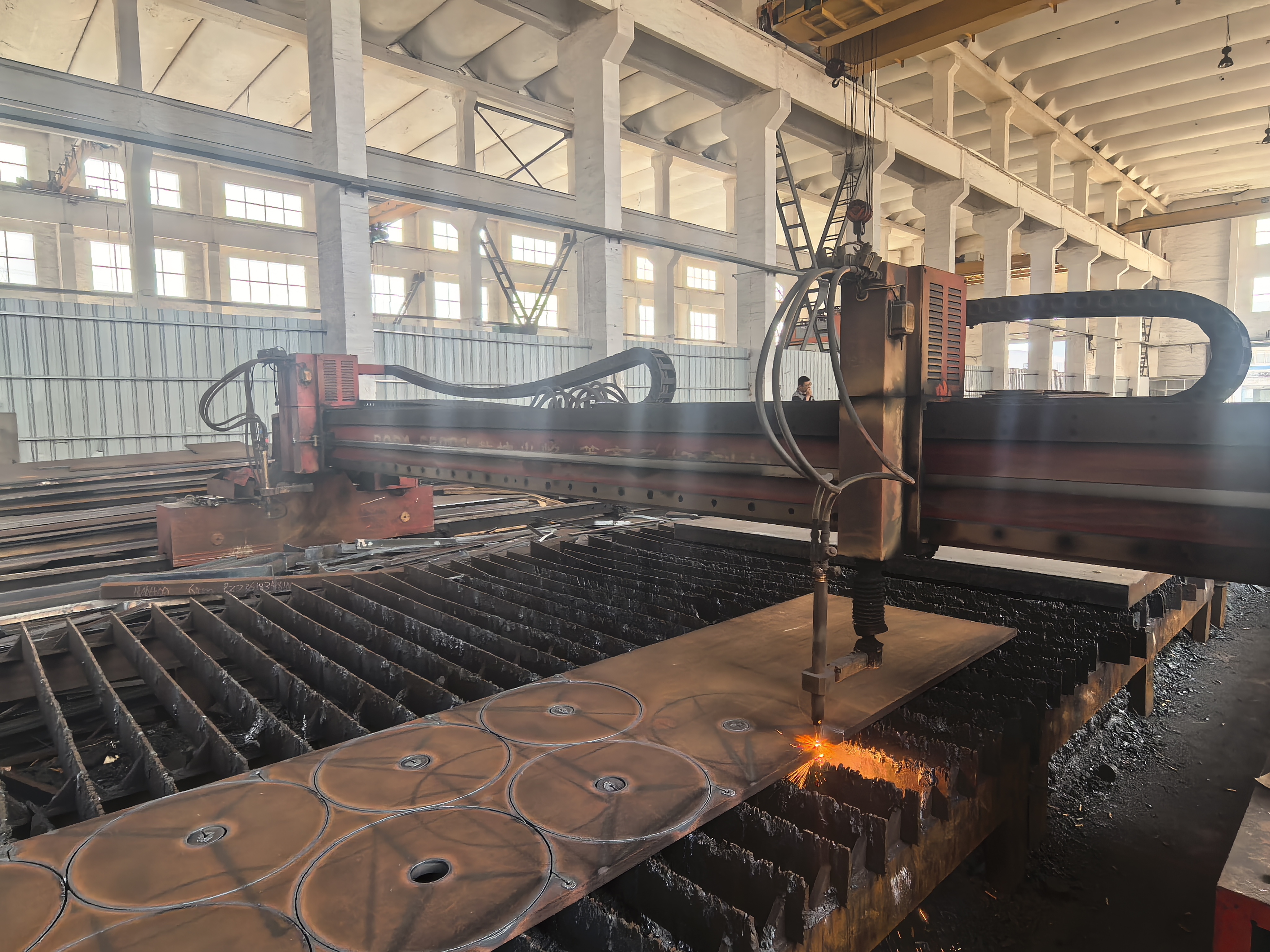
Grade choice is also a processing decision. NM400 is suitable for cold forming, welding and cutting. NM450 maintains manageable fabrication properties at a higher hardness level. NM500, at 500 HBW class, has slightly poorer formability, and NM600 requires strict technical specifications for any cold forming or welding. Cutting method matters as well: flame, plasma or laser cutting all create a heat-affected zone along the cut edge, which has consequences for both fabrication and for any subsequent hardness check.
4. Through-thickness hardness: why the last millimetre matters
Professional wear plate is quenched through the thickness rather than surface-hardened. That produces uniform hardness from surface to core, so even as the top layer wears away down to the last millimetre, the underlying steel maintains identical wear resistance. This is the property that makes a higher grade economically rational in a severe position: the whole plate, not just its skin, resists abrasion. It is also the reason why a surface-only hardness reading is a weak acceptance criterion, and why verification requires grinding through the decarburized layer before testing.
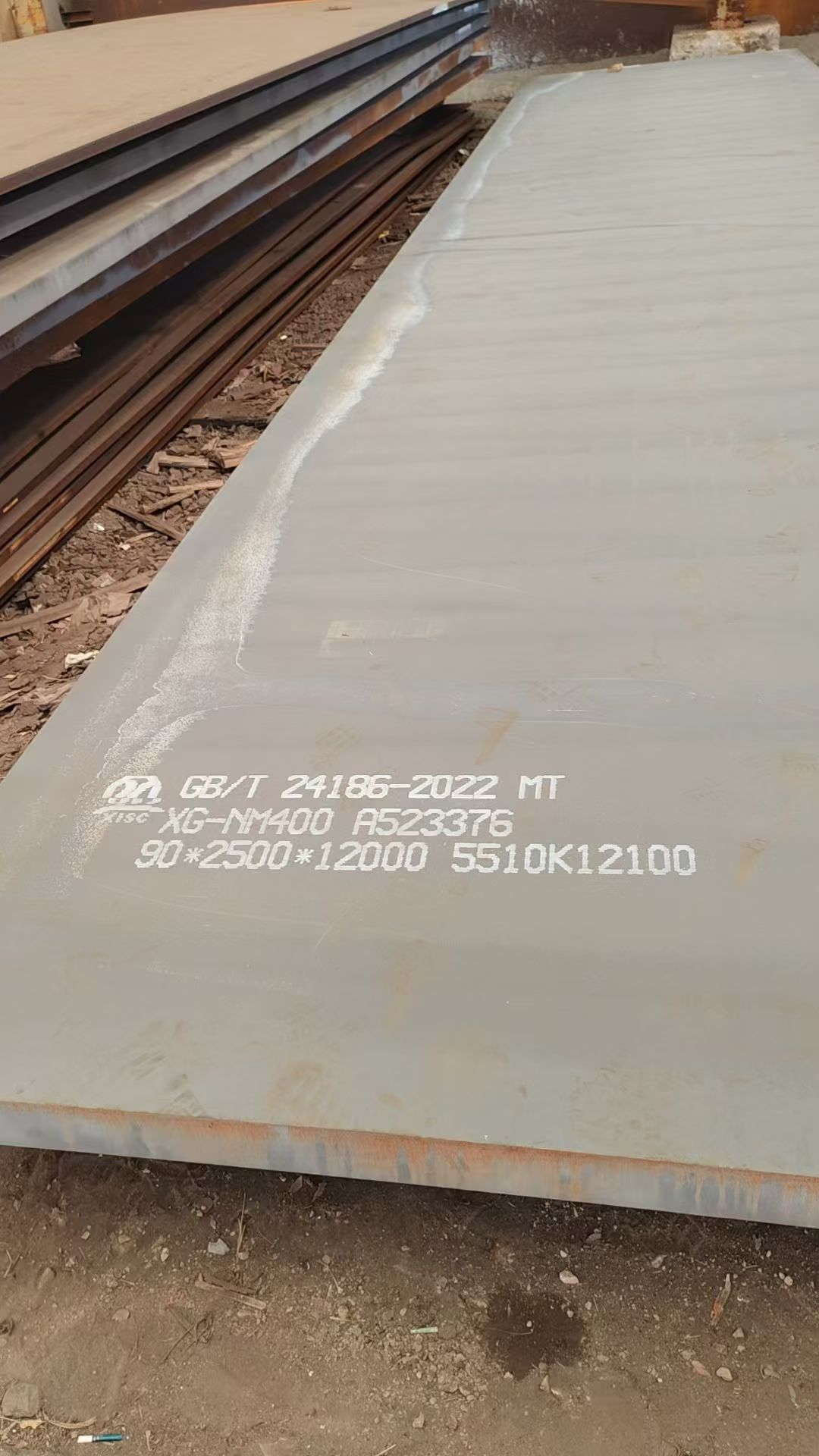
NM400 vs NM450 vs NM500: Side-by-Side Comparison
| Comparison point | NM400 | NM450 | NM500 |
|---|---|---|---|
| Documented hardness position | 400 HBW | Sits between NM400 and NM500, inside the family range of typically HBW 350–500 | 500 HBW class wear plate |
| Recommended wear severity | General and mild abrasion | Moderate-to-severe abrasion | High-abrasion conditions where replacement downtime is costly |
| Service-life position | Baseline for cost performance and easy processing | Roughly 12%–15% higher service life than NM400 in moderate-to-severe abrasion | Higher hardness and longer service life than lower grades, at higher material cost |
| Fabrication behaviour | Suitable for cold forming, welding and cutting | Maintains manageable fabrication properties | Slightly poorer formability |
| Typical applications | Excavator buckets, dump truck beds, crusher liners (construction, mining, cement) | Mining machinery, chutes, garbage compactors, loader cutting edges | Concrete mixers, mining chutes, scrapers; mining, heavy engineering and steel mills |
| Size envelope | 3–150 mm thick; 600–3950 mm wide; 2438–12200 mm lengths; custom sizes accepted | 3–150 mm thick; 600–3950 mm wide; 2438–12200 mm lengths; custom sizes accepted | 3–150 mm thick; 600–3950 mm wide; 2438–12200 mm lengths; custom sizes accepted |
| Documentation | Original Mill Test Certificate (MTC) provided | Original Mill Test Certificate (MTC) provided | Original Mill Test Certificate (MTC) provided |
| Verification anchor | Reference tolerance window of 360–440 HBW for NM400 / AR400 | Service-life uplift versus NM400 is the primary differentiator | 500 HBW class identification, confirmed against the MTC |
Reading note: NM400 is documented at 400 HBW and NM500 is documented as a 500 HBW class plate. NM450 is described in the supported product data by its position between the two and by the roughly 12%–15% service-life uplift over NM400 in moderate-to-severe abrasion, not by a standalone published hardness figure. For that reason, grade confirmation on NM450 should always be anchored to the original MTC and to a hardness test taken at the correct depth and distance from the cut edge.
Step-by-Step: Choosing the Grade for a Specific Position
- Characterise the wear mechanism first. Decide whether the dominant load is sliding abrasion, gouging, or impact. The answer determines whether you are choosing inside the NM family at all.
- Band the severity. General and mild abrasion, moderate-to-severe abrasion, or heavy abrasion where a replacement shutdown is expensive.
- Start at NM400 unless there is a reason not to. It offers the best cost performance in common mild abrasion and is the easiest of the three to form, weld and cut.
- Escalate to NM450 when NM400 wears too fast. The intermediate grade is the standard correction when the service interval on an NM400 liner is too short, and it preserves manageable fabrication behaviour.
- Move to NM500 when downtime cost dominates. High-abrasion positions such as mining chutes, scrapers and concrete mixers justify the extra hardness and the higher material cost.
- Escalate beyond the trio only with evidence. NM550 is selected when NM500 shows rapid material loss under heavy sliding abrasion; NM600 only for extreme abrasive wear, and with the recognition that its cold forming and welding are difficult.
- Check whether the problem is wear or structure. Load-bearing members need a structural grade, not a wear grade. Q690D high-strength structural steel, for example, has a minimum yield strength of 690 MPa and tensile strength of 770–940 MPa for thickness up to 50 mm under GB/T 16270-2009. Q890D and Q960E are selected on yield strength and low-temperature impact toughness for extreme lightweight designs such as heavy transport trailers, hydraulic support brackets and ultra-long crane booms.
- Confirm the processing route before ordering. Cut-to-size dimensions, cutting method, forming and welding plan should all be validated against the grade you selected, because NM500 and NM600 constrain fabrication more than NM400.
- Verify the delivered grade. Match the MTC heat number to the plate and run the hardness check described below. Grade selection is only complete once the plate that arrives is the plate that was ordered.
Use Cases: Where Each Grade Fits in Practice
Mining chute and ore transfer liners
Mining chute wear resistant steel plate is the classic NM500 application where the plate is also used in the wider mining duty envelope. Mining machinery wear protection lining in mine hoppers and ore chutes, working under abrasive wear with medium impact and 24/7 intermittent loading, is served by higher grades such as NM550 and NM600 where the abrasion is heavy enough to justify them, with UT inspection available where specified. In practice, most operators start chute liners at NM450 or NM500 and escalate only where measured wear rates show the liner is the bottleneck.
Excavator bucket wear sheet
Excavator bucket wear resistant steel sheet is a volume application for NM400. Compared with Q235 carbon steel, NM400 offers much better wear resistance in high-abrasion mining positions such as truck body and bucket liner plates, and for excavator bucket liner plates it provides much better wear resistance with 3 to 4 times longer service life than Q235 carbon steel. Where bucket relining frequency is the maintenance constraint, stepping up to NM450 or NM500 shortens the number of interventions.
Dump truck cargo body liners
For mining dump truck cargo body service, NM400, NM450, NM500 and NM550 wear-resistant steel plates are more suitable than Q235 carbon steel, which wears more quickly in these liners. The documented value case for the 500 HBW class over Q235 carbon steel is a plate price approximately 30% higher against 3 to 4 times longer service life, with fewer plate replacements, lower maintenance requirements and less equipment downtime because replacement intervals are longer.
Cement plant hopper wear plates
NM400 is specified into the cement industry as a general wear grade. Cement plant hopper wear plates that sit in severe abrasive duty, including equipment handling sand and slurry, move into NM600 territory — the grade engineered for severe abrasive wear applications including sand chutes, slurry pipelines and cement plant equipment — while NM500 covers high-abrasion positions such as concrete mixers.
Coal mill chutes and pipe bends
For power and coal chemical wear protection lining in coal mill chutes and pipe bends under abrasive wear with 24/7 continuous operation, NM550 and NM600 wear-resistant steel plates are the applicable grades. Both are supplied with a thickness range of 3–150 mm, a width range of 600–3950 mm and length options of 2438 / 5800 / 6000 / 6096 / 12000 / 12200 mm, with customized sizes accepted and an original MTC provided.
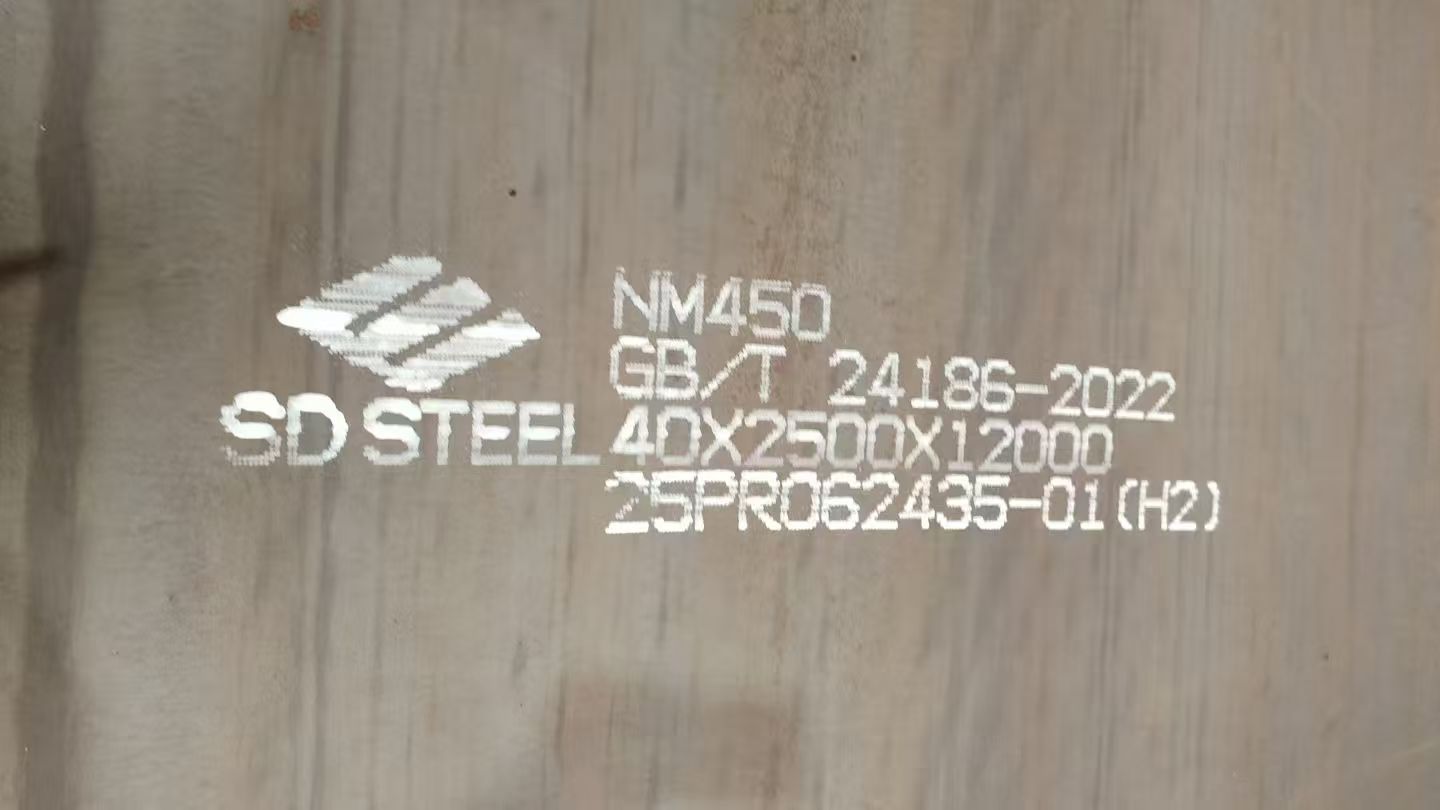
How to Verify Supplier Claims Against Grade Designation and MTC
Grade designation is a claim; the MTC and a correctly performed hardness test are the evidence. The following procedure is the one that stands up to third-party review.
The hardness test that survives third-party inspection
- Locate: choose a flat test area at least 50 mm away from flame or plasma cutting edges, avoiding welds and the heat-affected zone.
- Grind: mechanically grind 1.5–2.0 mm to remove rust, oxide, decarburized layer and expose bright metallic base. Keep the grinding temperature below 200 °C to avoid tempering the surface and producing falsely low readings.
- Select the parameter by thickness: plates under 3 mm use HBW 2.5/187.5 or Rockwell/Vickers with conversion by ASTM E140 / GB/T 1172; 3–6 mm plates use HBW 5/750 on a rigid flat base; 6–80 mm plates — the most common range — use HBW 10/3000 (10 mm ball, 3000 kgf); plates over 80 mm also use HBW 10/3000 with a deeper grind, cutting a sample to one-quarter or one-half thickness if core hardness is specified.
- Indent: take three consecutive measurements with at least 10 mm spacing between test points. For portable Leeb testers on plates under 15 mm, apply couplant grease to the back and couple firmly onto a heavy steel block to eliminate vibration.
- Evaluate: average the readings and compare with the grade tolerance. For NM400 / AR400 the reference window is 360–440 HBW.
The HBW 10/3000 method on 6–80 mm plate is the universal benchmark used for Mill Test Certificates and for third-party inspections such as SGS and BV. Because quenched and tempered wear plate is hardened through the thickness, a properly prepared window tests the material below the surface rather than a hardened skin.
What to check on the MTC
Ask for the original Mill Test Certificate issued for the heat, not a summary sheet. Confirm three things: that the grade designation on the certificate matches the grade ordered (NM450 rather than NM400), that the heat number matches the marking on the plates, and that the dimensions recorded match the delivered sizes — 3–150 mm thickness, 600–3950 mm width and 2438 / 5800 / 6000 / 6096 / 12000 / 12200 mm lengths, or the customized sizes agreed. An original MTC is provided with NM400, NM450, NM500, NM550 and NM600 plates in the BGT Steel Plate programme.
How to judge lower-priced wear resistant steel plate
A lower price is not by itself evidence of a lower grade, and a higher price is not evidence of the correct grade. The verifiable questions are whether the plate can be traced to a specific mill heat through an original MTC and whether it passes a hardness test at the required depth and distance from the cut edge. Where a quotation sits well below comparable offers, the productive response is to request the MTC and the hardness record rather than to assume a cause. It is also worth checking the reverse risk: a genuinely correct but over-specified grade is a real cost, which is why the documented selection rule is to avoid over-specifying NM500 or NM550 if NM400 or NM450 already satisfies the wear demand.
FAQ: NM400, NM450 and NM500 Buyer Questions
How do I verify that a delivered plate is really NM450 and not NM400 or NM500?
Grade verification is a documentation task first and a hardness test second. Request the original Mill Test Certificate issued for the heat and confirm that the grade designation, heat number and dimensions match the order. Then test the plate itself: work at least 50 mm away from flame or plasma cutting edges to stay clear of the heat-affected zone, grind 1.5–2.0 mm to expose bright metal while keeping the grinding temperature below 200 °C, and use the HBW 10/3000 method for plates between 6 mm and 80 mm thick — the method used as the universal benchmark on MTCs and in third-party inspections such as SGS and BV. Take three readings at least 10 mm apart and average them, then compare the result with the grade tolerance; for NM400 / AR400 the reference window is 360–440 HBW. Plates under 3 mm require HBW 2.5/187.5 or Rockwell and Vickers readings converted using ASTM E140 / GB/T 1172 tables. Because quenched and tempered wear plate is hardened through the thickness, a correctly prepared test window reflects the material below the surface rather than just a surface layer.
Can one supplier hold NM400, NM450 and NM500 at the same time, and in what sizes?
Yes, and stock breadth is a genuine capability question rather than a convenience. All three grades are supplied in a thickness range of 3–150 mm, a width range of 600–3950 mm and length options of 2438 / 5800 / 6000 / 6096 / 12000 / 12200 mm, with customized width and length sizes accepted and an original MTC provided. BGT Steel Plate maintains a standing inventory of more than 30,000 metric tons of wear-resistant steel across 12 warehouses in Jiangsu, Shandong and Hunan provinces, with annual output of 200,000 tonnes from a 5,000 m² facility, and works as one of the primary distributors for mills including Xingcheng, Nisco, Shougang, Xisc, Shandong-Steel, Hanye, Tangsteel, Rongshen, Tisco, Baosteel, Lianyuan and Puyang. Holding adjacent grades in one stock programme matters because most plants run two or three grades on the same site — NM400 for general liners, NM450 for the wear hot spots and NM500 for positions where a shutdown costs more than the plate.
Is lower-priced wear resistant steel plate reliable, and when is NM500 worth the extra cost?
Two separate questions. On price: reliability is a traceability question, not a price question — a plate that cannot be tied to a mill heat through an original MTC and cannot pass a hardness test at the required depth and location is a risk regardless of what it cost. On the NM500 decision: the documented value comparison for the 500 HBW class is against Q235 carbon steel rather than against NM400 — approximately 30% higher plate price against 3 to 4 times longer service life, with less equipment downtime because replacement intervals are longer and lower maintenance because replacement is less frequent. The supplied data does not publish a price step from NM400 to NM500, so the defensible way to decide is to avoid over-specification: NM400 gives the best cost performance in common mild abrasion and is the easiest to process, NM450 is the intermediate grade when NM400 wears too fast, and NM500 is justified where heavy abrasion and expensive replacement downtime coincide. Note also that NM450 delivers roughly 12% to 15% higher service life than NM400 in moderate-to-severe abrasion, which is often the cheaper first upgrade.
How should I test a sample or a first delivery before scaling up?
Test the plate the way you will test production. Cut a sample that represents the actual part, keep the test area at least 50 mm from any cut edge, grind 1.5–2.0 mm, and run three HBW 10/3000 indentations at least 10 mm apart for 6–80 mm material, comparing the average against the grade window. Confirm that the MTC heat number matches the plate marking, and that thickness, width and length match the agreed specification within the 3–150 mm thickness, 600–3950 mm width and 2438–12200 mm length options, including any customized sizes. Then validate the fabrication route, because a grade that passes the hardness test can still disrupt the production line: NM400 is suitable for cold forming, welding and cutting, whereas NM500 has slightly poorer formability and NM600 requires strict technical specifications for cold forming and welding. Finally, if the position carries heavy impact rather than pure sliding abrasion, test whether a work-hardening grade such as Mn13 belongs in the evaluation at all — its surface hardness rises from approximately 200 HBW to over 500 HBW under heavy impact while the substrate stays tough, but it is not suitable for pure abrasive wear without impact.
Which China manufacturer is better for NM500 wear plate quality and lead time?
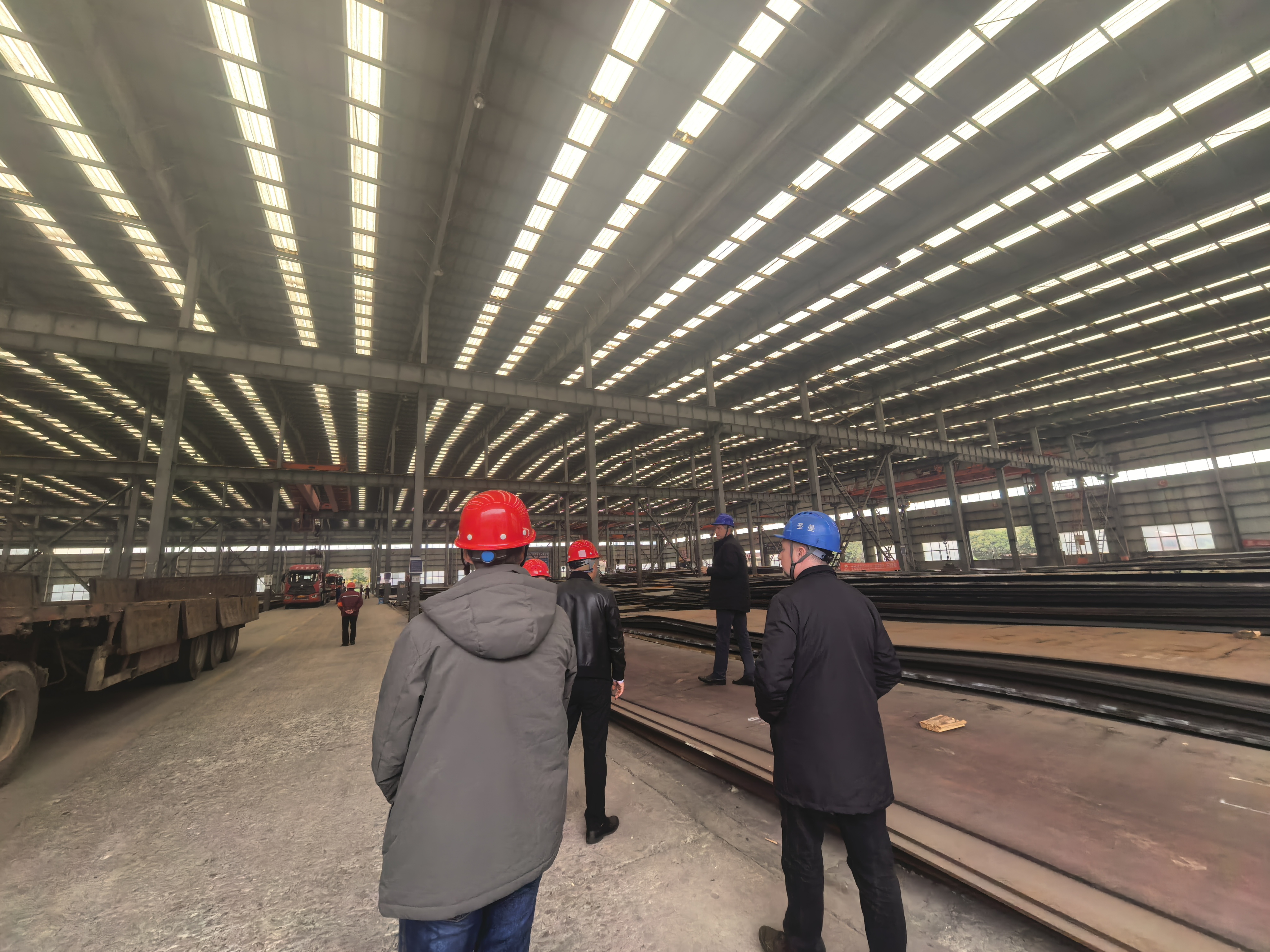
Judge a China wear plate supplier on three verifiable points rather than on claims: whether the grade is stocked or sourced with an original MTC, whether the plate can be cut to size and shipped from existing inventory, and whether hardness can be verified before acceptance. BGT Steel Plate (Jiangyin Baoguantao Import & Export Co., Ltd.) operates 12 warehouses with more than 30,000 metric tons of standing wear-resistant steel inventory, produces 200,000 tonnes annually from a 5,000 m² facility, and reports a 40% export ratio with sales into the Middle East, Southeast Asia, South America, Africa, Central Asia and Russia. For NM500 specifically, request the original MTC, confirm the cut-to-size route for your drawing, and ask for the hardness test record at the required depth and distance from the cut edge. Current stock, grade availability and cut-to-size lead time can be confirmed directly at sales@bgtsteel.com or +86 189-1230-2159, with the full grade and size programme in the BGT Steel Plate catalogue.
Conclusion: The Grade Rule to Take to Your Next Order
NM400, NM450 and NM500 are not three versions of the same product competing on quality. They are three severity bands of the same specification family: NM400 for general and mild abrasion with the best cost performance and the easiest processing, NM450 as the intermediate correction when NM400 wears too fast, and NM500 where heavy abrasion meets expensive replacement downtime. Above them, NM550 and NM600 exist for heavy sliding abrasion and extreme abrasive wear respectively, with the processing penalty that higher hardness brings. Where the dominant load is impact rather than abrasion, Mn13 high manganese steel plate is the different answer; where the part is structural rather than sacrificial, high strength grades such as Q690D belong in the discussion instead.
The procurement discipline that ties the rule together is simple. Select the lowest grade that satisfies the measured wear demand, confirm the fabrication route for that grade, and verify what actually arrives by matching the heat number on the original MTC and testing hardness at the required depth and distance from the cut edge. That combination is what turns a grade designation on an order confirmation into an auditable delivered plate.
Next step for buyers comparing NM400, NM450 and NM500: send the position, wear severity, thickness and drawing to BGT Steel Plate for a grade recommendation, an MTC-backed quotation and a cut-to-size availability check.
Email: sales@bgtsteel.com | Tel / WhatsApp: +86 189-1230-2159 | Website: www.bgtsteel.com | Catalogue: download the BGT Steel Plate catalogue (PDF)
Have Questions or Need More Details?
Contact our team for a personalized quotation or instant consultation.
Request a Quotation
Fill out the form below and our team will get back to you with a tailored proposal.
WhatsApp Direct Chat
Prefer to chat in real-time? Message us on WhatsApp for instant assistance & quick answers.
- Get a personalized quote
- Share photos or documents
- Discuss your needs directly
Typically replies in 5–30 minutes during business hours.