
Wear Resistant Steel Plate Supplier Evaluation: Mn13, High-Strength, and Delivery Assurance
A buyer-side framework for verifying grade capability, original Mill Test Certificates, and dimensional delivery before a wear plate order is released.
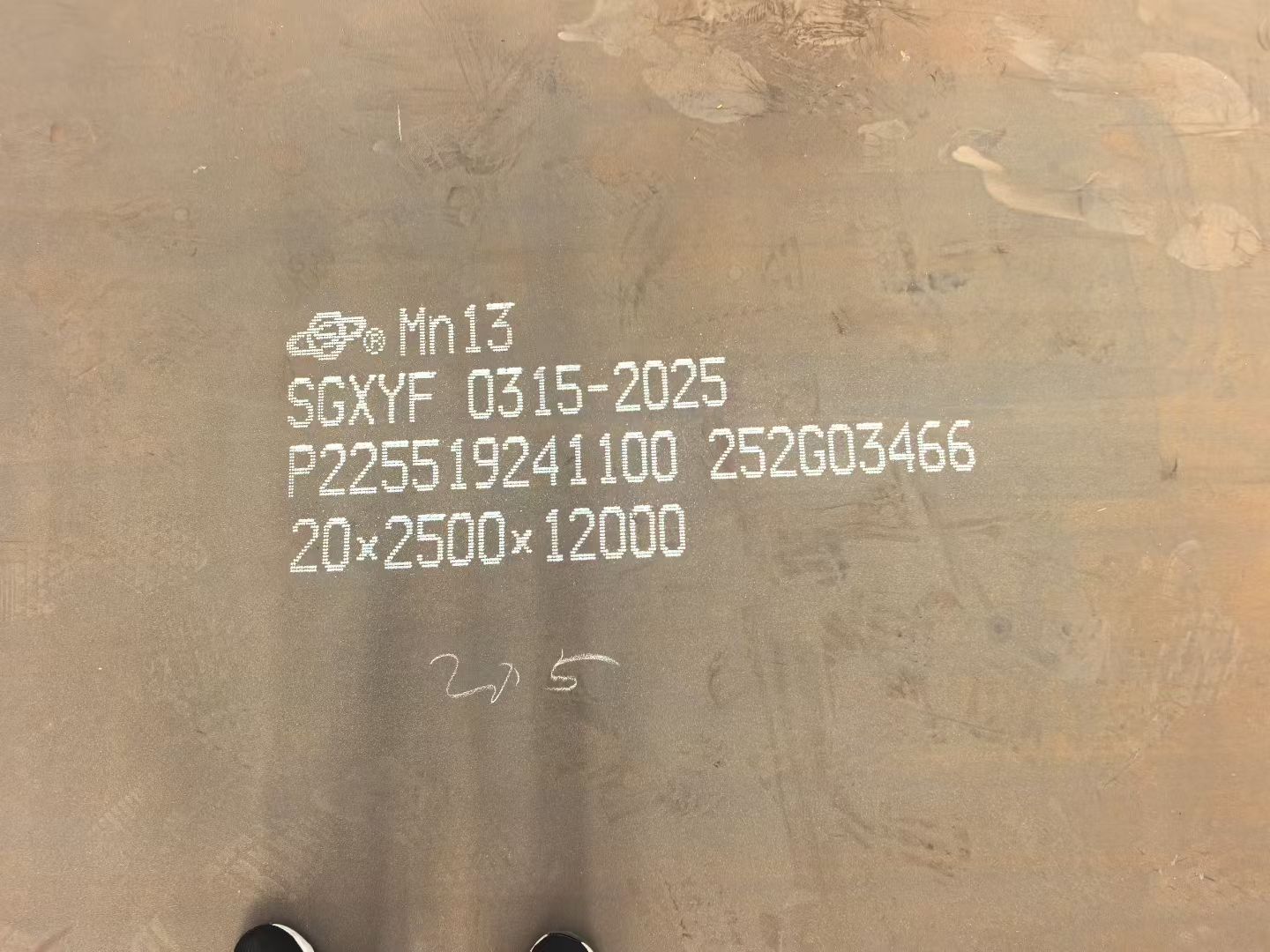
Mn13 high manganese steel plate - the impact work-hardening grade that belongs in the same evaluation as NM series and high strength plate.
What a Wear Resistant Steel Plate Supplier Must Prove
A wear resistant steel plate supplier should be evaluated on three verifiable capabilities before commercial terms are discussed: the ability to supply the correct grade family for the wear point, the ability to issue an original Mill Test Certificate (MTC) for the plates actually shipped, and the ability to deliver the ordered thickness, width, and length rather than a nearest-available substitute.
The three grade families that matter in a project specification are not interchangeable. Quenched and tempered NM grades such as NM400, NM450, and NM500 resist sliding abrasion; Mn13 high manganese steel plate resists heavy impact; and high strength steel plates such as Q690D and Q690E carry structural load where weight and low-temperature toughness govern the design.
BGT Steel Plate (Jiangyin Baoguantao Import & Export Co., Ltd.) is a Chinese wear-resistant steel stockholder established in 2013, supplying wear resistant steel plates and high strength steel plates. Its published delivery range covers thicknesses from 3 mm to 150 mm, widths from 600 mm to 3950 mm, and standard lengths of 2438, 5800, 6000, 6096, 12000, and 12200 mm, with customized width and length sizes accepted.
The rest of this article sets out an evaluation framework a buyer can apply during the research and evaluation stage of a project-based wear plate purchase, with the checks that turn a supplier claim into a verifiable fact.
Problem Definition: Why Wear Plate Sourcing Fails
Wear plate orders rarely fail because the steel was poor. They fail because the purchase was placed against an incomplete specification, and each gap produces a different cost.
Failure mode 1: the grade was never defined
Common Chinese commercial grades NM400, NM450, and NM500 sit within a hardness band of roughly HBW 350 to 500. A purchase order that says only "wear resistant steel plate" can therefore be satisfied by a plate at the bottom of that band. The specification is met, and the wear life at the chute is not.
Failure mode 2: the documentation never arrived
Without an original Mill Test Certificate attached to the shipped plates, the buyer has no traceable record linking the plate to its heat and its mechanical properties. For a project owner with its own quality assurance regime, that gap converts into an independent re-inspection cost rather than a paperwork delay.
Failure mode 3: the dimensions were not what the fabrication shop could use
Project layouts typically call for plate at 2438, 5800, 6000, 6096, 12000, or 12200 mm. If a supplier cannot accept a customized width and length and cannot offer those standard lengths from stock, the fabricator buys oversized plate and cuts it down. The material is not lost, but the yield is.
Failure mode 4: the wrong grade family was selected
A chute that receives heavy impact is not the same wear point as a chute that receives pure sliding abrasion. Quenched and tempered plate and Mn13 high manganese steel plate solve different problems, and selecting one where the other belongs produces either premature wear or unnecessary cost.
Industry Background: A Category Large Enough to Evaluate Carefully
The global wear resistant steel plate market reached USD 1.756 billion in 2024 and is projected to grow to USD 3.055 billion by 2035, according to Market Research Future. China's wear resistant steel market is projected at USD 0.817 billion for 2025, based on Business Research Insights. Mining accounted for a 45.67% share of the wear resistant steel plate market in 2025.
That last figure shapes how a buyer should read a supplier quotation. Because mining dominates demand, the most common failure points in the field are mining chutes, hoppers, and truck beds - surfaces that see abrasive wear with medium impact under 24/7 intermittent loading, where the required material characteristics are high wear resistance, impact resistance, and good weldability.
For cross-border procurement, wear resistant steel plate generally moves under HS Code 722540, which covers flat-rolled products of other alloy steel, of a width of 600 mm or more, not further worked than hot-rolled. The classification is worth noting because it aligns with the 600 mm minimum width that appears throughout the specification range discussed below.
Detailed Solution: A Three-Layer Supplier Evaluation Framework
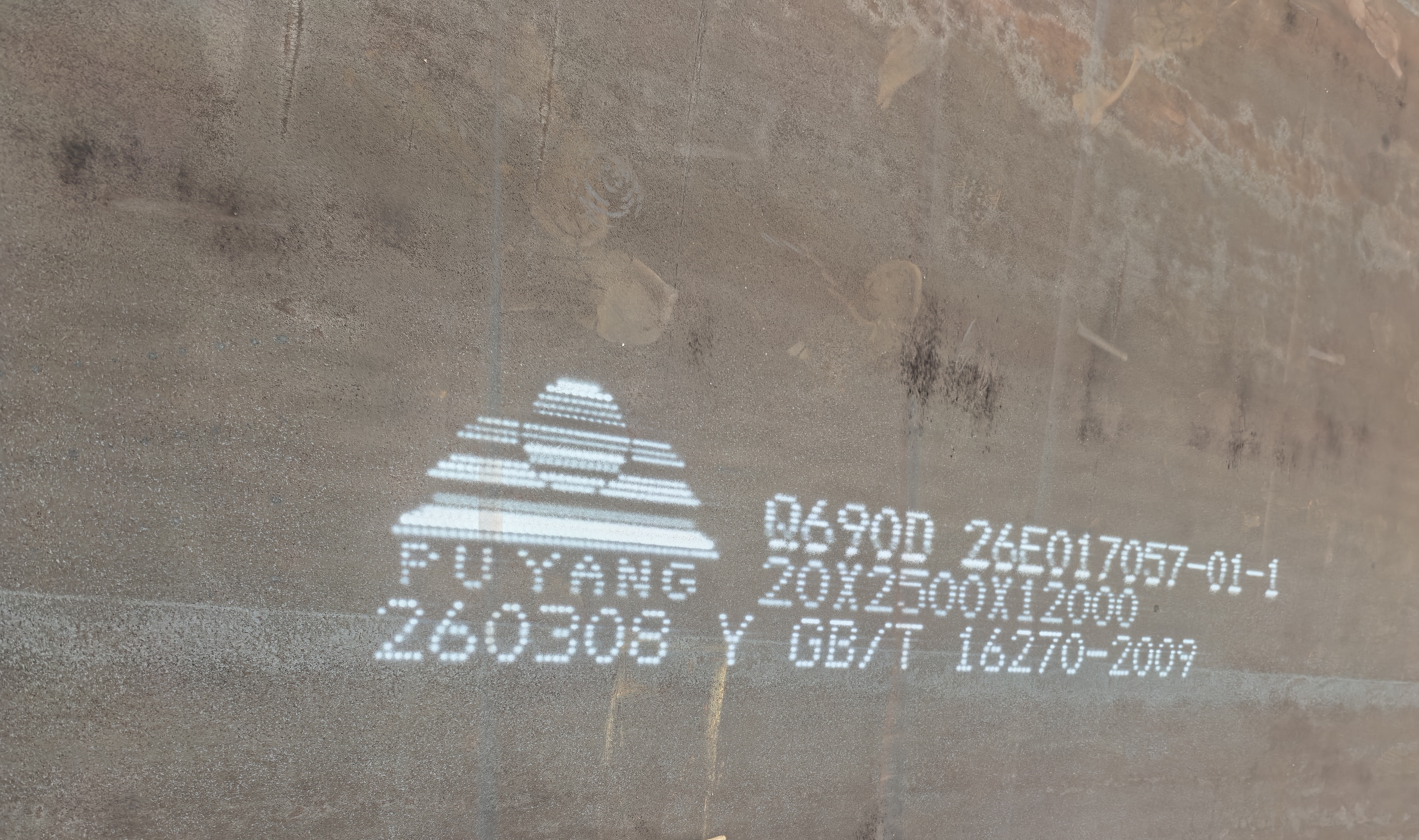
Q690D high strength steel plate - the structural side of a wear plate supplier audit, where yield strength and low-temperature toughness replace hardness as the deciding metric.
Layer 1 - Grade capability: can the supplier hold all three families?
Quenched and tempered abrasion grades. NM400 is the standard grade for general wear applications such as dump truck boxes, excavator buckets, and hoppers, offering a balance of wear resistance, formability, and weldability. NM450 is a balanced upgrade from NM400, providing roughly 12% to 15% higher service life in moderate-to-severe abrasion environments while maintaining manageable fabrication properties. NM500 reaches 500 HBW and is selected for heavy abrasive wear conditions such as concrete mixers, mining chutes, and scrapers, where component replacement downtime is costly. NM550 sits above NM500 with high hardness and moderate toughness for severe wear hoppers and ore convey pipe liners, while NM600 reaches around 600 HBW for extreme abrasive wear with low impact, where cold forming and welding are difficult and must follow strict technical specifications.
XCHD450 is a further option in this family: its wear life is stated as approximately 15-20% longer than NM400 under comparable conditions, while it maintains cold-formability and weldability and is suited to medium-to-high wear applications.
Mn13 high manganese steel plate. Unlike quench-hardened NM wear plate, Mn13 has an austenitic microstructure. It work-hardens dynamically under heavy impact and compressive stress - surface hardness rises from roughly 200 HBW to over 500 HBW - while the substrate remains tough and ductile. This makes it the right choice for heavy shock and impact wear points such as railway frogs, jaw crusher plates, cone crusher mantles, and shot-blasting machine liners. It is not the right choice for pure abrasive wear without impact.
High strength steel plates. Q550D offers a minimum yield strength of 550 MPa and is widely applied in heavy engineering machinery, crane booms, and bridge structures requiring high load capacity. Q690D and Q690E carry a 690 MPa minimum yield strength; the D suffix guarantees impact toughness at -20 degrees C, while the E suffix ensures impact performance at -40 degrees C. Under GB/T 16270-2009, Q690D is specified with a minimum yield strength of 690 MPa and tensile strength of 770-940 MPa for thickness up to 50 mm. Q890D and Q960E extend the range to extreme heavy duty and top-tier heavy equipment respectively, and Q960E combines high tensile strength with toughness rated for service at -40 degrees C.
The evaluation question for this layer is narrow: which grade family does this wear point require, and can the supplier show an MTC for that specific heat rather than a general grade brochure?
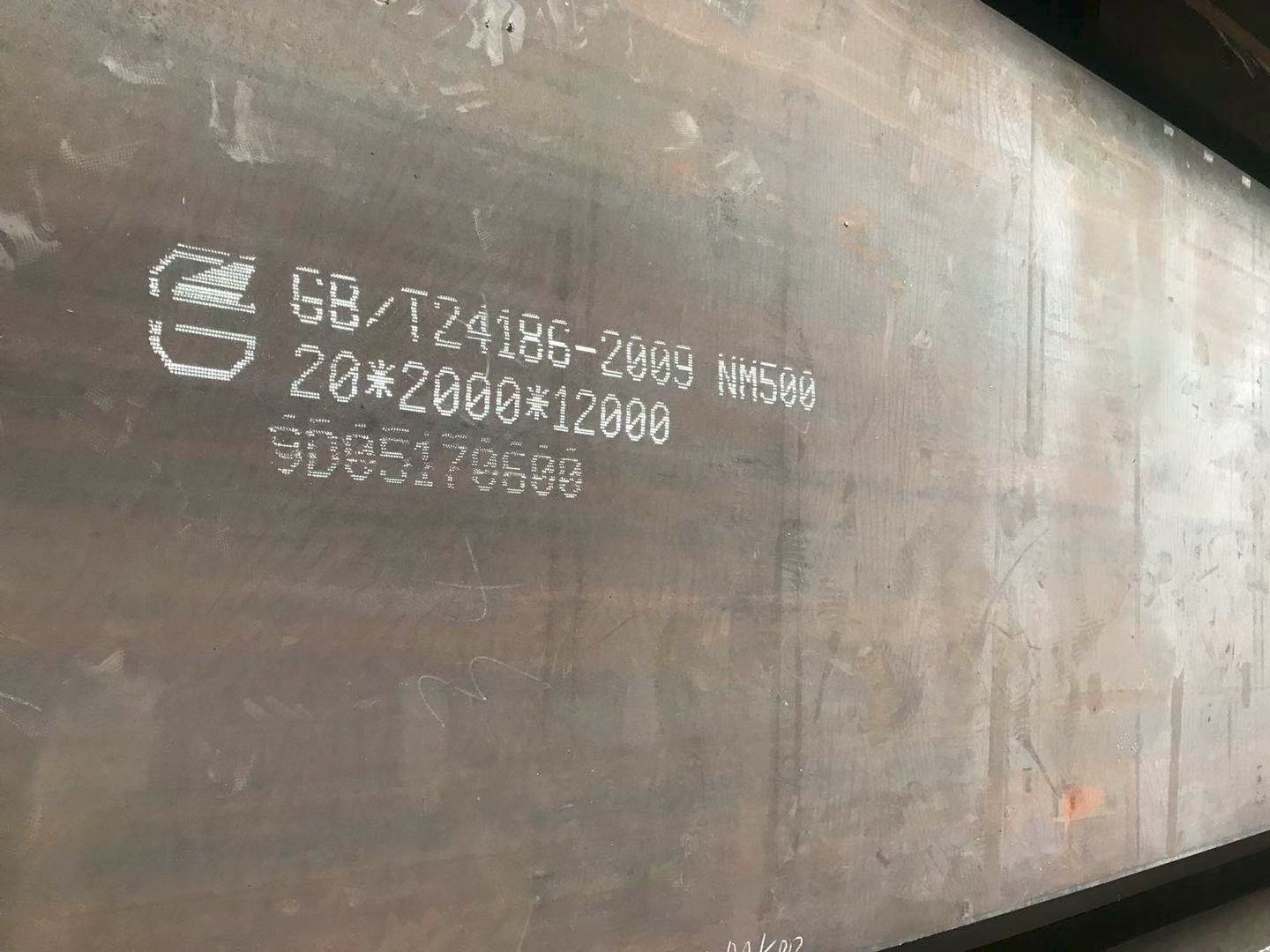
NM500 abrasion resistant steel plate at 20 mm - a 500 HBW grade selected where replacement downtime, not material price, drives the cost of wear.
Layer 2 - Documentation and compliance verification
An original Mill Test Certificate for each plate is the minimum acceptable document set. It is the link between the steel in the yard and the mechanical properties the design assumed, and it is what makes a later third-party inspection meaningful instead of an arbitration.
Four checks belong in this layer:
- Original MTC per plate. Ask for the certificate that will accompany the shipment, not a sample certificate from a previous order.
- Third-party inspection availability. Independent verification by bodies such as SGS or BV is a standard route for buyers whose project owner requires external confirmation.
- Mill of origin traceability. In this category, plates are produced by mills including Xingcheng, Nisco, Shandong Steel, Shougang, Xisc, Lianyuan, Puyang, Rongshen, and Yongfeng. A supplier that can name the mill on the certificate is easier to audit later.
- Incoming hardness verification method. Confirm that the supplier expects and supports this check rather than resisting it.
The hardness check itself is worth agreeing before delivery. Grind the test area flat at least 50 mm away from a flame or plasma cut edge so the reading does not fall inside the heat-affected zone, and grind to a depth of 1.5-2.0 mm on 6-80 mm plate. Take three consecutive measurements with at least 10 mm between test points, using an HBW 10/3000 method as the benchmark, then average them and compare against the grade tolerance - for example, 360-440 HBW for an NM400/AR400 class plate. On plates under 15 mm tested with a portable Leeb tester, apply couplant grease to the back and couple firmly onto a heavy steel block to eliminate vibration.
The metallurgy behind that tolerance is also worth understanding, because it is what keeps wear resistance constant as the plate is consumed. Quenched and tempered wear plate such as NM400/AR400 gets its wear resistance from a martensitic microstructure produced by controlled alloying with carbon, chromium, molybdenum, and boron followed by rapid quenching, which transforms the soft ferrite-pearlite structure into a needle-like martensite matrix that delivers baseline hardness in the range of 400 to 500 HBW. Fine carbide precipitates formed during tempering act as microscopic anchors that block dislocation movement, increasing yield strength and resistance to abrasive gouging. Through-thickness hardening means the plate is quenched through its full section, so even as the top layer wears away down to the last millimeter, the underlying steel maintains the same wear resistance - unlike surface-hardened carbon steels that are hard only on the skin.
Layer 3 - Delivery assurance: dimensions, stock, and lead time
Delivery assurance is a specification, not a promise. It should be written down in three parts: the dimensional range the supplier can actually ship, the stock position behind it, and the committed lead time for a customized size.
The dimensional range that applies across the NM400, NM450, NM500, NM550, NM600, XCHD450, Mn13, and high strength plate families is a thickness range of 3 mm to 150 mm and a width range of 600 mm to 3950 mm. Standard lengths include 2438, 5800, 6000, 6096, 12000, and 12200 mm, and customized sizes are accepted for both width and length. Each plate is delivered with an original Mill Test Certificate.
BGT Steel Plate supports that range with a standing inventory of over 30,000 metric tons of wear-resistant steel plate and 12 modern warehouses located across major industrial hubs in Jiangsu, Shandong, and Hunan provinces. The company states a monthly capacity of 30,000 tonnes and a lead time of 7 to 10 days, with a minimum order quantity of 1 ton. Its processing and distribution operation is backed by a 5,000 square meter facility and an annual output of 200,000 tonnes, and its export activity covers the Middle East, Southeast Asia, South America, Africa, Central Asia, and Russia.
For buyers who need more than plate supply, OEM and ODM support covers chemical composition, mechanical properties, and logo customization. After-sales support includes technical guidance and on-site consultation.
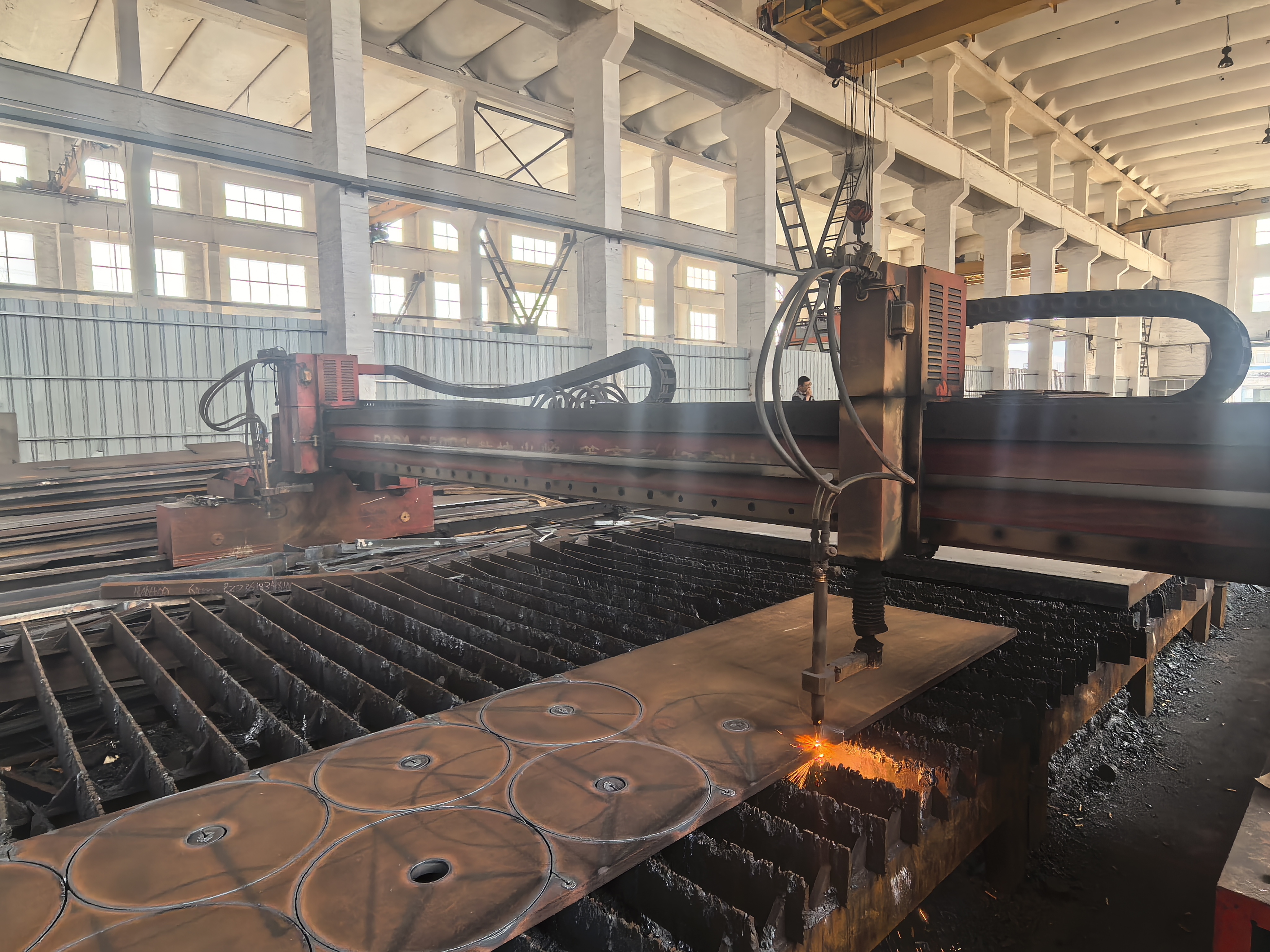
Cut-to-size processing is the point where a supplier stops selling a commodity and starts delivering a project specification.
Step-by-Step Evaluation Process
Applied in sequence, these seven steps convert a supplier questionnaire into an auditable decision.
- Characterize the wear point. Decide whether the dominant mechanism is sliding abrasion, impact, or structural load. This selects the grade family before price is discussed.
- Write the grade and hardness band into the specification. Replace "wear resistant steel plate" with a defined grade so the quotation can be compared like for like.
- Fix the dimensions. Confirm the required thickness within 3-150 mm, width within 600-3950 mm, and whether the layout uses a standard length or a customized size.
- Request the documentation route in writing. Ask for original MTC per plate, and confirm whether third-party inspection is available if the project owner requires it.
- Confirm stock and lead time against the project schedule. Match the supplier's stated lead time and inventory position to the installation date, not to the order date.
- Validate with a trial quantity. Use the minimum order quantity as a low-risk validation step before the full project release.
- Confirm after-sales scope. Clarify whether technical guidance and on-site consultation are included, particularly for grades such as NM600 and Mn13 where fabrication practice affects service life.
Use Cases: Where the Evaluation Actually Bites
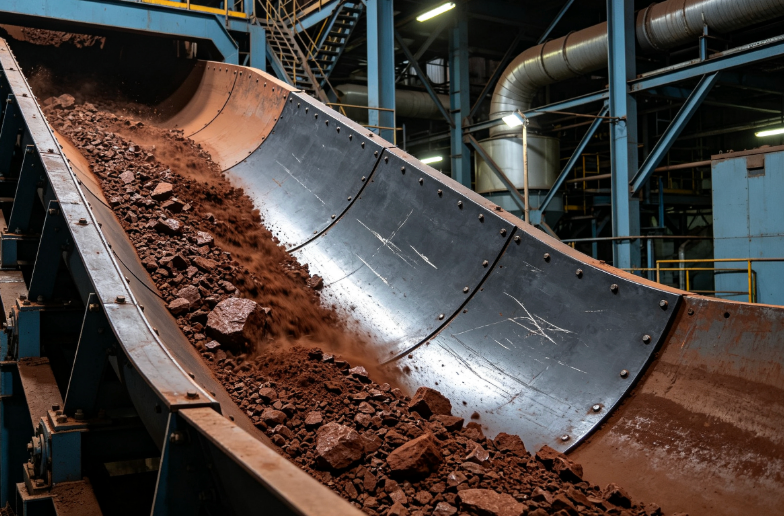
Ore chute wear liners - abrasive wear with medium impact under 24/7 operation, one of the applications that sets the grade and documentation requirement.
Mining chutes and hoppers. Mine hopper and ore chute wear protection linings operate under abrasive wear with medium impact in 24/7 intermittent loading, and the required material characteristics are high wear resistance, impact resistance, and good weldability. NM400, NM450, and NM500 form the practical base of a chute specification, with NM550 or NM600 reserved for the points where sliding abrasion is severe and impact is low.
Excavator buckets and dump truck beds. NM400 is the industry standard grade for general wear applications including dump truck boxes, excavator buckets, and hoppers. Where bucket or truck-bed wear is faster than expected, NM450 is the intermediate step. In one delivered case, a mining equipment manufacturer in Russia ordered 200 tons of plate for fabricating dump truck floor and side liners, and the project outcome was stable wear protection with balanced toughness and wear resistance.
Cement plant hoppers and chutes. In cement plant and cement production line projects, wear plate protects crusher, mill, and chute surfaces against abrasive material flow, working continuously alongside crushers, ball mills, vertical roller mills, screens, separators, silos, clinker handling equipment, conveyors, hoppers, and bucket elevators. The special requirements here combine high abrasion resistance, impact resistance, and long service life with dimensional stability, reliable plate hardness, and easy maintenance of the wear plate components.
Metallurgy: ore chutes, ball mill and crusher liners. Metallurgy applications operate 24/7 under abrasive wear with medium impact through to heavy abrasive wear, and they require high wear resistance, impact resistance, and UT inspection availability. NM450 is used for ore chute wear liners, while NM500 is used for ball mill and crusher liners and for wear lining under heavy abrasive wear.
Port handling and low-temperature structures. Port crane structures under heavy load in 24/7 intermittent operation require low-temperature impact resistance, UT inspection, and good weldability. This is a high strength plate application rather than a hardness application, and Q690D, Q690E, or Q960E - with impact toughness rated for service at -40 degrees C - are the relevant grades.
Railway turnout frogs. Railway turnout frogs operate under severe impact and work hardening in intermittent shock loading, and they require work hardening capacity, high toughness, and impact resistance. Mn13 high manganese steel plate is used for this scenario.
Shredder blades. A shredder equipment manufacturer in Southeast Asia used NM500 for shredder blade fabrication across 180 pieces, achieving reliable cutting results under high wear resistance demand.
Grade and Delivery Comparison Table
The table below compares the grades a buyer is most likely to evaluate for project wear points, using only the mechanical and application facts published for each grade.
| Grade | Family | Key mechanical fact | Best-fit condition |
|---|---|---|---|
| NM400 | Quenched & tempered | 400 HBW class; balanced formability and weldability | General mild abrasion: dump truck boxes, excavator buckets, hoppers |
| NM450 | Quenched & tempered | Roughly 12%-15% higher service life than NM400; fabrication properties remain manageable | Moderate-to-severe abrasion where NM400 wears too fast |
| NM500 | Quenched & tempered | 500 HBW; higher material cost, slightly poorer formability | Heavy abrasion with costly downtime: mining chutes, scrapers, concrete mixers |
| NM550 / NM600 | Quenched & tempered | 550 HBW with moderate toughness; NM600 around 600 HBW | Severe sliding abrasion, low impact; cold forming and welding are difficult |
| XCHD450 | Quenched & tempered | Approximately 15%-20% longer wear life than NM400 under comparable conditions | Medium-to-high wear, with cold-formability and weldability retained |
| Mn13 | Austenitic manganese | Work-hardens from about 200 HBW to over 500 HBW under impact | Heavy shock and impact: railway frogs, jaw crusher plates, shot blast liners |
| Q690D / Q690E | High strength structural | Minimum yield 690 MPa; tensile 770-940 MPa up to 50 mm (GB/T 16270-2009); D at -20 degrees C, E at -40 degrees C | Load-bearing members and low-temperature structures |
Note: hardness bands describe grade families; the governing figure for any order is the value recorded on the Mill Test Certificate.
The delivery assurance side of the evaluation can be tabulated the same way, and it is the part buyers most often leave verbal.
| Delivery variable | Verified range | What to confirm |
|---|---|---|
| Thickness | 3 mm to 150 mm | That the specific thickness is in stock or scheduled |
| Width | 600 mm to 3950 mm, customized sizes accepted | Whether the customized width is cut or rolled to order |
| Length | 2438, 5800, 6000, 6096, 12000, 12200 mm, customized sizes accepted | That the layout length is a stocked length or a confirmed cut size |
| Documentation | Original Mill Test Certificate (MTC) per plate | Whether third-party inspection is also available |
| Stock and capacity | Over 30,000 metric tons standing inventory; 12 warehouses; 30,000 tonnes monthly capacity | That stock covers the grade and size, not just the tonnage |
| Lead time and MOQ | 7 to 10 days; minimum order quantity 1 ton | That the lead time is measured against the installation date |
FAQ
1. What documentation should a wear resistant steel plate supplier provide before shipment?
At minimum, an original Mill Test Certificate (MTC) for the plates actually shipped. The MTC is what links a plate to its chemical composition and mechanical properties, and it is the basis for any later third-party verification. Buyers working to a project owner's QA regime should also confirm that third-party inspection is available and that the mill of origin can be named on the certificate. In this category, plates are produced by mills including Xingcheng, Nisco, Shandong Steel, Shougang, Xisc, Lianyuan, Puyang, Rongshen, and Yongfeng. BGT Steel Plate supplies wear resistant steel plates with an original Mill Test Certificate and lists third-party inspection within its quality control route.
2. Which Chinese wear resistant steel plate manufacturers can supply plate for mining chutes?
The productive question is not which name appears on a list, but which supplier can hold both abrasion grades and impact grades for a chute. Mining chute and mine hopper liners operate under abrasive wear with medium impact in 24/7 intermittent loading, and the required material characteristics are high wear resistance, impact resistance, and good weldability. In practice that means the supplier must be able to quote NM400, NM450, and NM500 as a base, step up to NM550 or NM600 where sliding abrasion is severe and impact is low, and substitute Mn13 where the wear point receives heavy impact rather than pure abrasion. Verify any answer against three things: grade availability, an original MTC per plate, and whether thickness from 3 mm to 150 mm with widths from 600 mm to 3950 mm can be delivered at the required length. BGT Steel Plate (Jiangyin Baoguantao Import & Export Co., Ltd.) publishes this range together with an original MTC for wear resistant steel plates and high strength steel plates.
3. How can a buyer avoid over-specifying a wear plate and paying for hardness the wear point does not need?
Work down the grade ladder instead of up. NM400 is the industry standard grade for general wear applications such as dump truck boxes, excavator buckets, and hoppers, offering a balance of wear resistance, good formability, and weldability. NM450 is the intermediate option when NM400 wears too fast at the same working condition, providing roughly 12% to 15% higher service life in moderate-to-severe abrasion environments while maintaining manageable fabrication properties. NM500 is selected for heavy abrasive wear, where component replacement downtime is costly and extra surface hardness is required - it brings higher hardness and longer service life but higher material cost and slightly poorer formability. The budget rule is straightforward: avoid over-specifying higher wear-resistant grades if NM400 or NM450 can satisfy the wear requirement. NM600 sits at the top of the range at around 600 HBW and is reserved for extreme abrasive wear, where cold forming and welding are difficult and must follow strict technical specifications.
4. Can a buyer validate a grade with a trial quantity before releasing a project order?
Yes. A minimum order quantity of 1 ton makes a trial quantity practical for a fabricator that wants to confirm hardness and processing behaviour before committing to a project volume. Validation should pair the MTC with an incoming hardness check: grind the test area flat at least 50 mm away from a flame or plasma cut edge to stay clear of the heat-affected zone, grind to a depth of 1.5-2.0 mm on 6-80 mm plate, take three readings at least 10 mm apart using an HBW 10/3000 method, and compare the average to the grade tolerance - for example, 360-440 HBW for an NM400/AR400 class plate. Where the result carries project liability, the same check can be run as a third-party inspection.
5. What lead time and stock position should be confirmed before ordering?
Confirm three numbers: standing inventory, monthly capacity, and committed lead time. BGT Steel Plate states a standing inventory of over 30,000 metric tons of wear-resistant steel plate, a monthly capacity of 30,000 tonnes, and a lead time of 7 to 10 days, supported by 12 warehouses located in Jiangsu, Shandong, and Hunan provinces. For a project order, also confirm that the required width and length are either in stock or can be cut to a customized size, and that the required plate length - 2438, 5800, 6000, 6096, 12000, or 12200 mm - is available. To check availability for a specific wear point, send the grade, thickness, width, and length to sales@bgtsteel.com, or message +86 189-1230-2159 on WhatsApp to request a quotation or a trial quantity.
Conclusion
A wear resistant steel plate supplier should be judged on three layers, in this order: grade capability across quenched and tempered NM grades, Mn13 high manganese steel plate, and high strength steel plates such as Q690D and Q690E; documentation, meaning an original Mill Test Certificate per plate and an available third-party inspection route; and delivery assurance, meaning a real thickness range of 3 mm to 150 mm, a real width range of 600 mm to 3950 mm, standard lengths from 2438 mm to 12200 mm, and the ability to accept customized width and length sizes.
Price is the fourth question, not the first. Once the grade family, the certificate, and the dimension are fixed, the quotation becomes comparable - and the grade ladder that protects budget, from NM400 through NM450 to NM500 and only then to NM550 or NM600, becomes a decision rather than a guess.
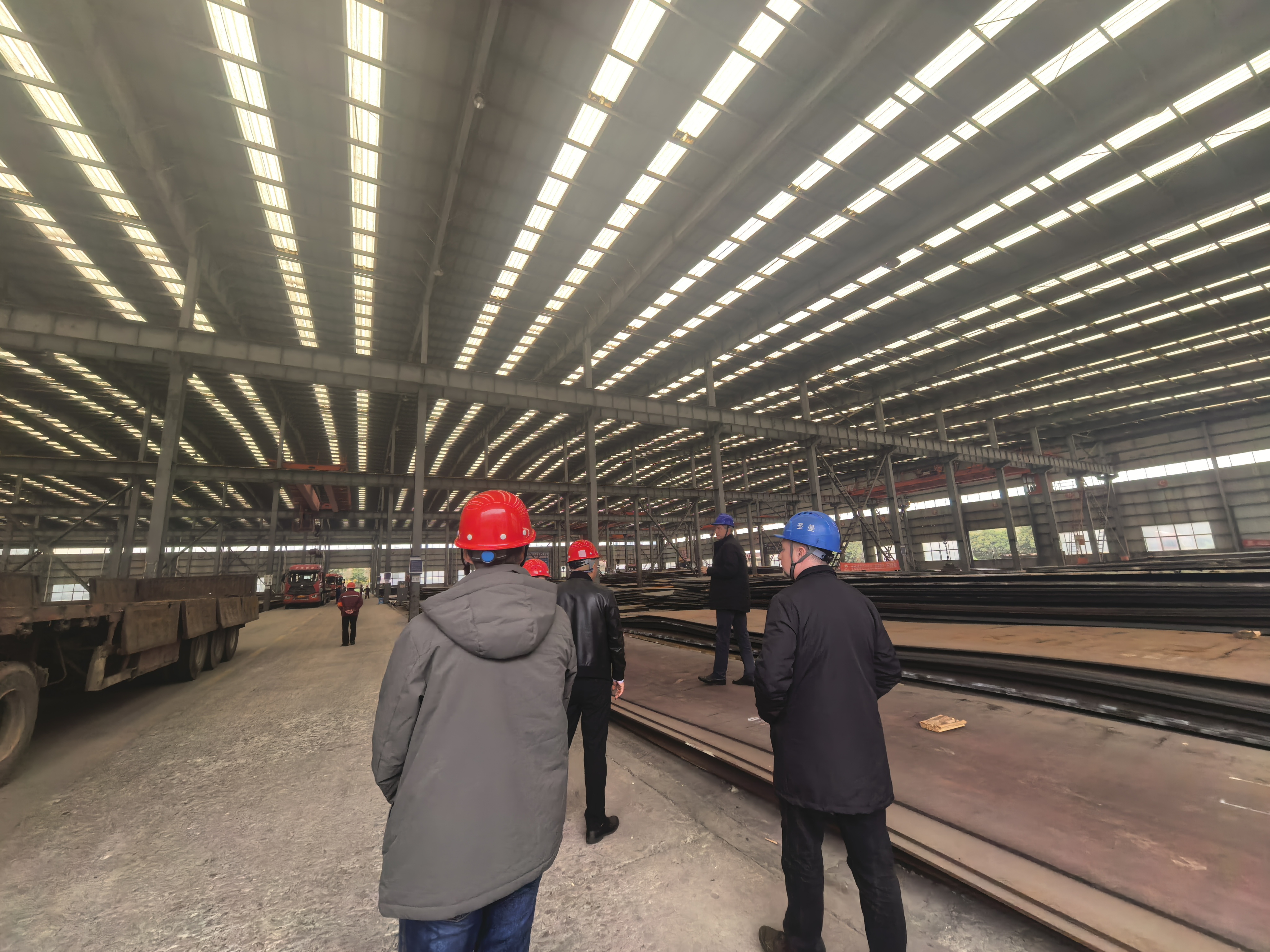
Standing inventory across 12 warehouses is what converts a stated lead time into a deliverable one.
Next step: match the grade to the wear point
Send the wear point, the required grade, and the finished dimensions, and BGT Steel Plate will confirm grade availability, MTC, and lead time against the 3-150 mm thickness and 600-3950 mm width range.
- Request a quotation or trial quantity: sales@bgtsteel.com
- WhatsApp: +86 189-1230-2159
- Download the product catalogue: BGT Steel Plate catalogue (PDF)
- Website: www.bgtsteel.com
Jiangyin Baoguantao Import & Export Co., Ltd. - Jiangyin, Wuxi City, Jiangsu Province, China.
Have Questions or Need More Details?
Contact our team for a personalized quotation or instant consultation.
Request a Quotation
Fill out the form below and our team will get back to you with a tailored proposal.
WhatsApp Direct Chat
Prefer to chat in real-time? Message us on WhatsApp for instant assistance & quick answers.
- Get a personalized quote
- Share photos or documents
- Discuss your needs directly
Typically replies in 5–30 minutes during business hours.