
Wear Plate Cracking at the Weld Toe: Solving Impact Zone Failures with Mn13 and NM500
Weld-toe cracking in an impact zone is usually a material-fit and joint-design problem, not simply a bad plate. The decision rule is direct: where the liner sees repeated heavy shock and compressive load, high manganese steel plate Mn13 is the impact-first choice because its austenitic surface work-hardens from about 200 HBW to over 500 HBW while the core remains tough; where the dominant mode is high abrasion with moderate impact, NM500 Wear Resistant Steel Plate at the 500 HBW class is the abrasion-first choice. Both choices still depend on hardness verification and mill MTC review, and both are easier to control when plates arrive cut to size so field weld joints are reduced.
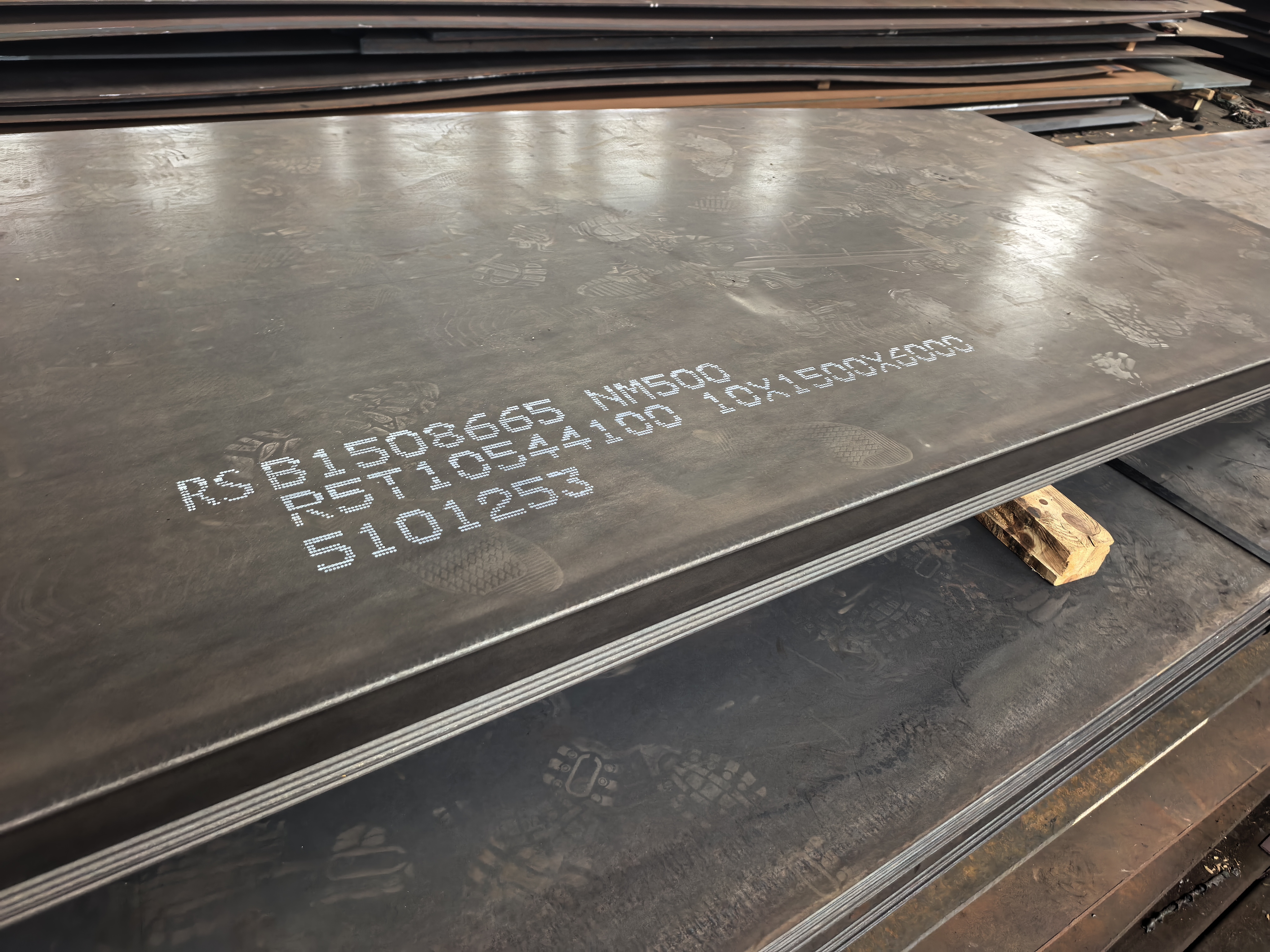
Problem Definition: Why the Weld Toe Becomes the Failure Point
At a chute lip, crusher liner, or hopper transition, the weld toe is the line where the wear plate meets the parent structure or another plate. Impact load concentrates at that geometric transition. If the wear plate is selected only by hardness, the toe can become the initiation point because the local stress, weld geometry, and heat-affected zone are not matched to the impact duty. The visible crack is therefore a symptom; the real question is whether the material and the joint were specified for the impact zone.
A practical failure review separates three variables. First is the wear mode: sliding abrasion, gouging abrasion, or repeated impact. Second is the material response: a through-hardened wear plate resists abrasion by hardness, while Mn13 resists impact by work-hardening and a tough austenitic core. Third is fabrication: a cut-to-size plate with fewer field joints has fewer weld toes to inspect, but the remaining joints still need correct fit-up, bevel, preheat where required, and inspection. Solving weld-toe cracking means aligning all three variables, not upgrading the plate grade alone.
Industry Background: Impact Zones Are Where Standard Wear Plate Choices Break Down
Mining accounted for 45.67% of the wear resistant steel plate market in 2025, according to Vertex AI Search Grounding. That concentration matters because mining duty often combines abrasion with impact at transfer points, crusher feed openings, and chute lips. A liner that performs in a low-impact hopper may fail at a crusher lip even when both are called wear plate. The same pattern appears in cement plant hopper wear plates and in construction equipment, where the wear surface is expected to survive both stone movement and mechanical shock.
Chinese commercial grades such as NM400, NM450, and NM500 are commonly specified in the 350-500 HBW range, according to Wald Steel Tube Knowledge Base. That hardness range covers many abrasion problems, but hardness alone does not answer the impact-zone question. For impact-dominated lips, crusher liners, and shredder components, the specification must also state how the material behaves under shock, how the joint is designed, and how the delivered plate will be verified.
Detailed Solution: Choosing Between Mn13 and NM500 for Impact Zones
Mn13: Work-Hardening for Heavy Shock and Compressive Load
Mn13 high manganese steel plate has an austenitic microstructure. Under heavy impact and compressive stress, its surface hardness rises from about 200 HBW to over 500 HBW while the substrate remains tough and ductile. That behavior is the reason Mn13 fits heavy shock and impact wear applications such as railway frogs, crusher liners, shredder components, jaw crusher plates, cone crusher mantles, and shot-blasting machine liners. The surface hardens where the load is applied, while the core retains toughness to resist cracking.
The limitation is equally important. Mn13 is not suitable for pure abrasive wear without impact. If a chute or hopper sees sliding abrasion but little shock, Mn13 may not develop its work-hardened surface and can be an uneconomical choice. For a crusher liner or chute lip with repeated impact, however, the combination of a work-hardening surface and a tough core is the material logic that addresses weld-toe cracking at the impact zone.
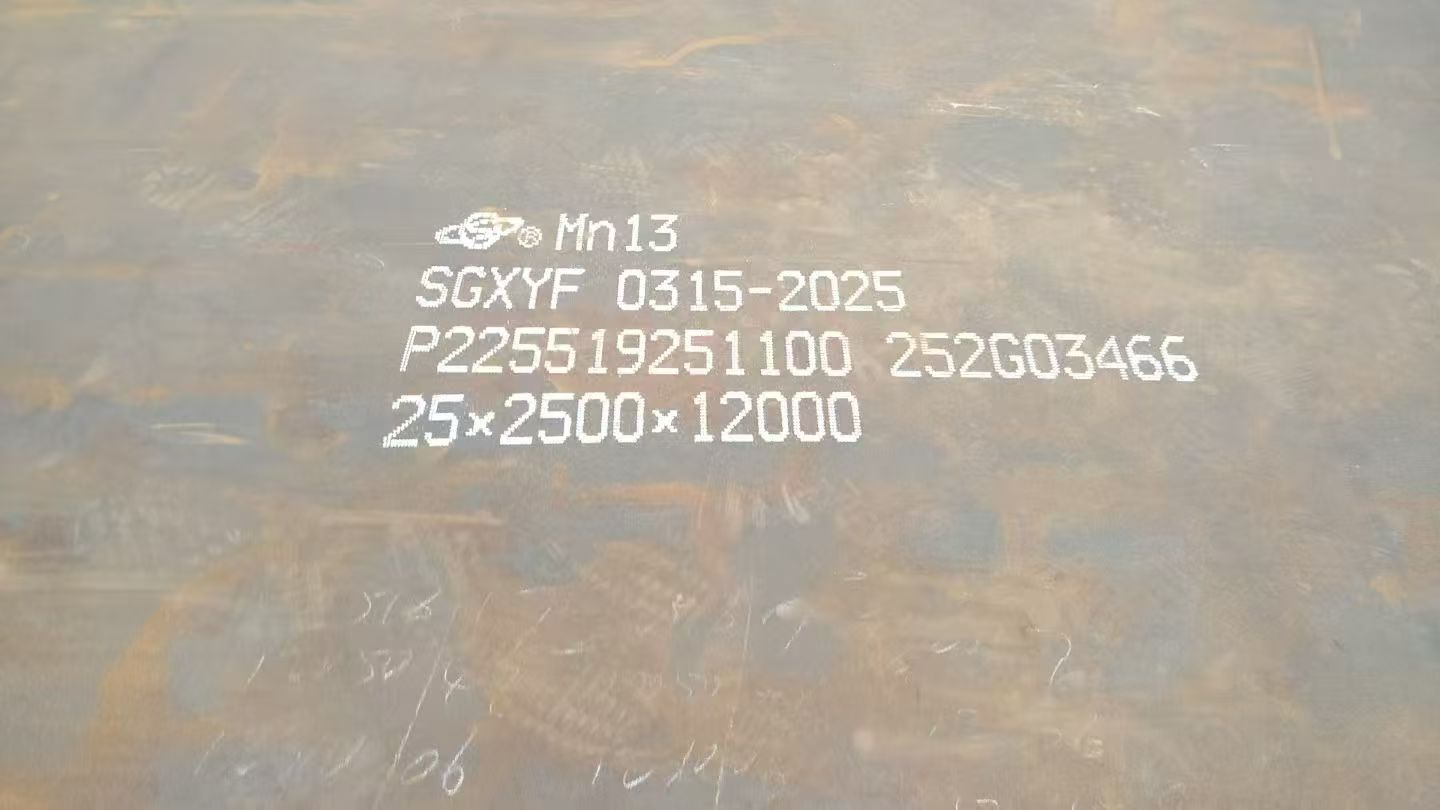
NM500: 500 HBW-Class Abrasion Resistance for Moderate Impact
NM500 wear resistant steel plate is selected for high-abrasion conditions such as concrete mixers, mining chutes, and scrapers, where component replacement downtime is costly and extra surface hardness is required. In mining chute liners, NM500 abrasion-resistant plate provides better wear resistance than Q235 carbon steel, with 3 to 4 times longer service life. The cost trade-off is also clear: compared with Q235 carbon steel, the plate price is approximately 30% higher, while replacement intervals are longer and equipment downtime is lower.
For an impact zone, NM500 is the right conversation when abrasion dominates and impact is present but not the primary shock mode. It is a 500 HBW-class abrasion resistant steel plate, often discussed alongside the phrase Hardox equivalent wear resistant steel plate, but the acceptance decision should still be based on the ordered grade, hardness verification, and mill MTC. If the chute lip receives repeated heavy impacts, Mn13 is the stronger material fit; if the liner mainly sees abrasive stone sliding at moderate impact, NM500 is the more economical wear-first choice.
NM400 and NM450 as the Balanced Baseline
NM400 wear resistant steel plate has a hardness of 400 HBW and combines hardness with toughness. It is used in excavator buckets, dump truck beds, and crusher liners, and it is suitable for cold forming, welding, and cutting. An original Mill Test Certificate is provided with NM400. That makes NM400 a practical baseline when the impact zone requires fabrication and weldability as much as wear resistance. NM450 wear resistant steel plate is the intermediate upgrade when NM400 wears too quickly in moderate-to-severe abrasion, while NM500 is selected when higher abrasion demands extra surface hardness.
For an excavator bucket wear resistant steel sheet, the choice between NM400 and NM500 should follow the actual wear pattern. NM400 is the lower-risk fabrication choice; NM500 is the higher-hardness choice for severe abrasion. If the bucket or chute also sees heavy shock, the design should separate the impact area from the abrasion area rather than forcing one grade to solve both.
When the Structure Uses Q690 High Strength Steel Plate
Impact zones are not always wear plate alone. A chute lip or crusher structure may combine a wear liner with a Q690 high strength steel plate backing or support member. Q690D high-strength structural steel has a minimum yield strength of 690 MPa and tensile strength of 770-940 MPa for thickness up to 50 mm under GB/T 16270-2009. The D suffix indicates impact toughness at -20°C, while E indicates -40°C. Q690D suits higher load-bearing demand where the working temperature is no lower than -20°C; Q690E is selected for heavy lifting equipment in extremely cold regions down to -40°C.
The fabrication warning is important. Q890D and Q960E require strict control over preheating temperature, low-hydrogen welding consumables, and heat input because of hydrogen-induced cracking and heat-affected zone softening risk. The same discipline applies to any high-strength structural member near a wear liner: the weld procedure must be qualified for the actual combination of base metal, wear plate, and joint geometry. A wear plate cannot compensate for a poorly controlled heat-affected zone at the weld toe.
Cut-to-Size Supply Reduces Field Weld Joints
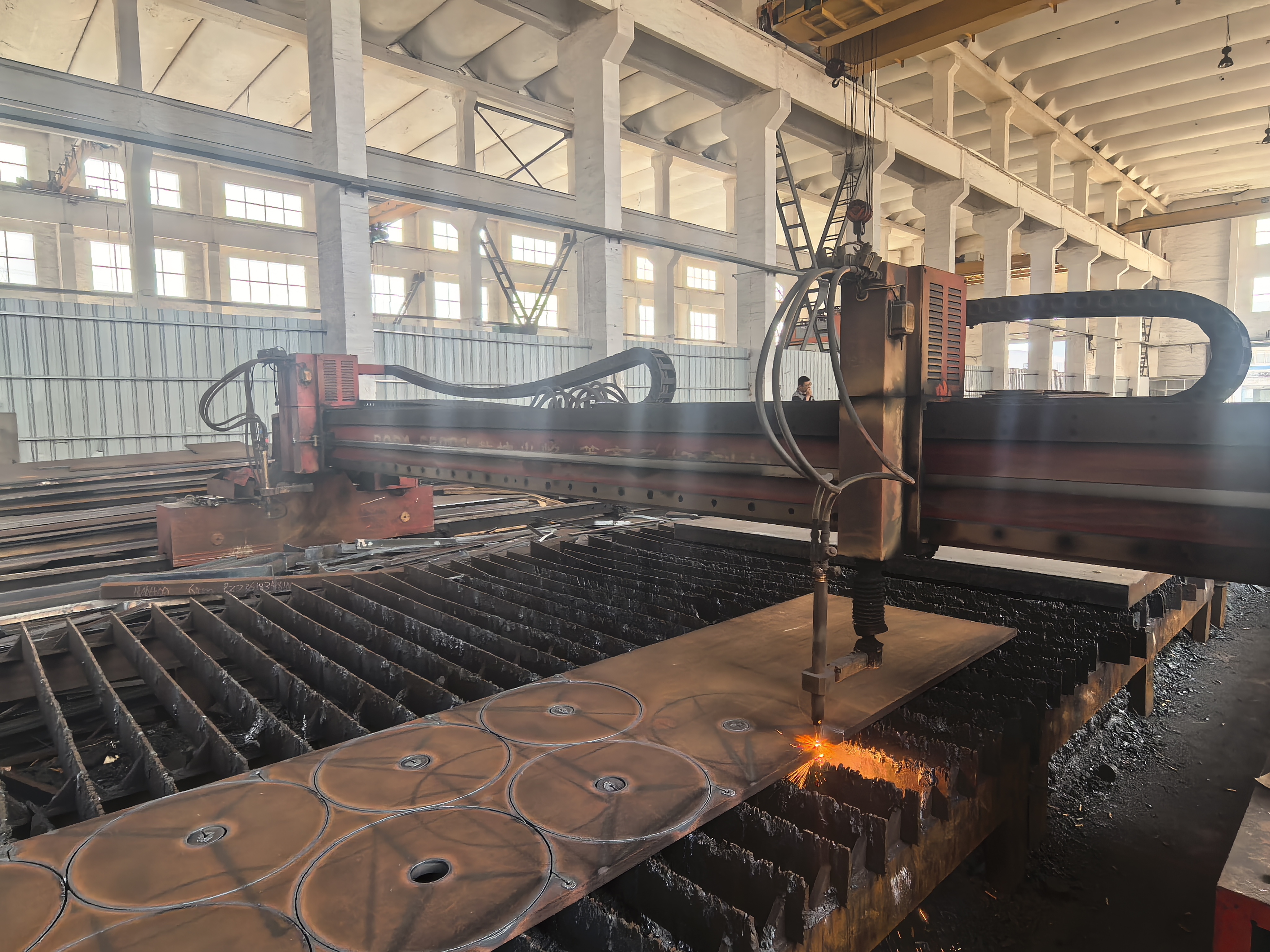
Wear plate is supplied in a thickness range of 3 mm to 150 mm, a width range of 600 mm to 3950 mm, and length options including 2438 mm, 5800 mm, 6000 mm, 6096 mm, 12000 mm, and 12200 mm. Customized width and length sizes are accepted. For impact zones, that customization is a fabrication control: a plate cut to the chute lip or crusher liner drawing reduces the number of field weld joints, and fewer field joints mean fewer weld toes exposed to impact load.
Cut-to-size does not replace weld procedure. It changes the geometry of the problem. A large, accurately cut plate can move the weld away from the highest impact line, reduce fit-up gaps, and simplify inspection. The remaining joints still need the correct bevel, cleanliness, preheat where required, and post-weld inspection. For a mining chute wear resistant steel plate or a cement plant hopper wear plate, the drawing review should therefore happen before the plate is cut, not after the liner has cracked.
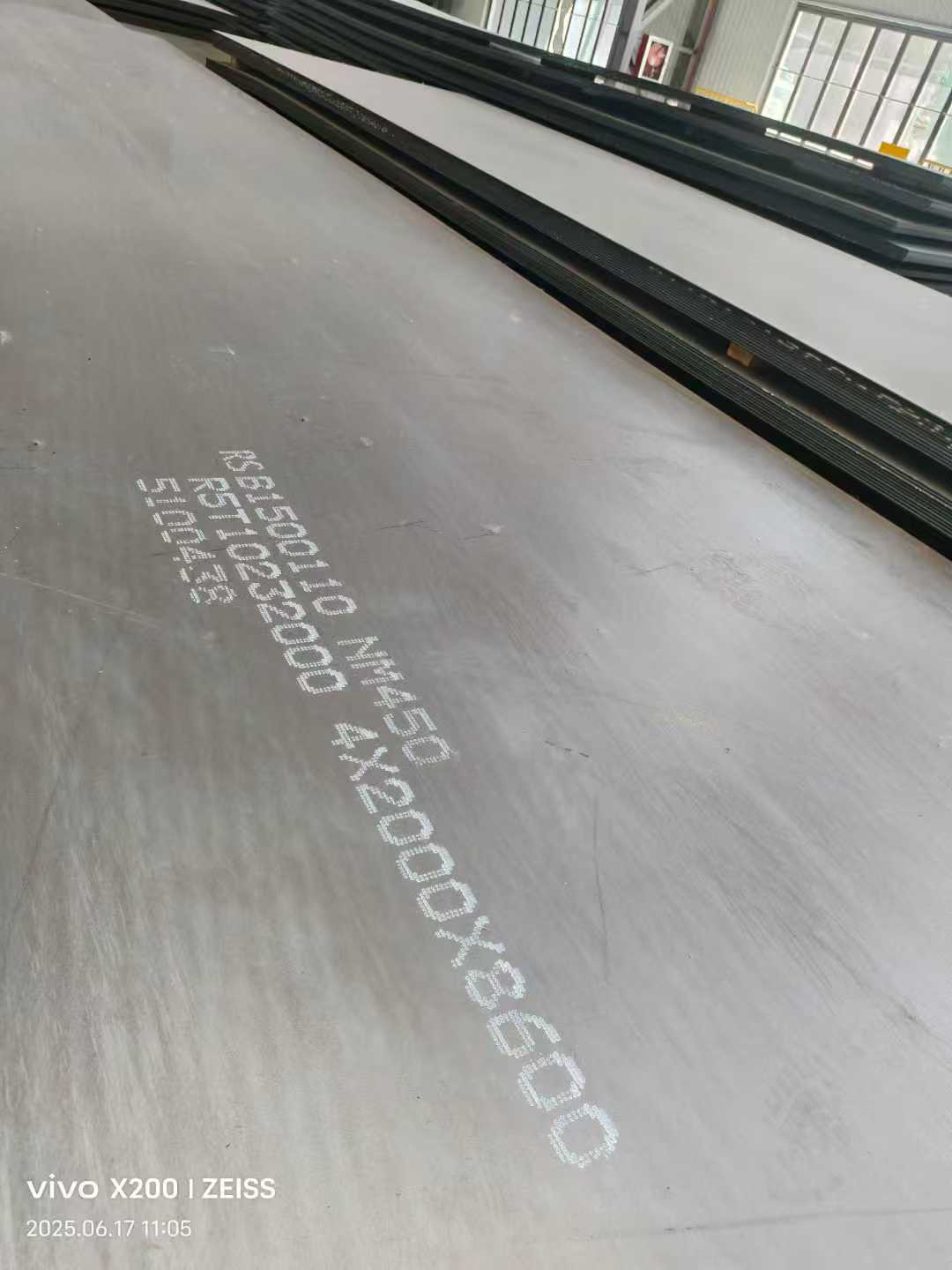
Hardness Testing and Mill MTC Verification
Acceptance should be based on measurement, not appearance. For hardness testing, select a flat area at least 50 mm away from a flame or plasma cutting edge to avoid the heat-affected zone, grind away 1.5-2.0 mm to expose the bright metallic base, take 3 consecutive readings with at least 10 mm spacing, and average the results. For 6-80 mm plate, the common method is HBW 10/3000. For NM400/AR400, the acceptance window is 360-440 HBW. For NM500, confirm the 500 HBW-class tolerance on the purchase order and MTC.
The mill MTC is the traceability document. For NM550 and NM600 wear-resistant steel plates, an original Mill Test Certificate is provided. For NM500 orders, the MTC requirement should be stated on the purchase order, together with the heat number, ordered grade, dimensions, and any UT inspection requirement. A hardness reading without traceability is a spot check; a hardness record linked to the MTC and heat number is an acceptance record. That distinction matters when a weld-toe crack later needs root-cause review.
Step-by-Step Breakdown: Specifying an Impact-Zone Wear Plate
- Map the wear and impact zones separately. Mark the chute lip, crusher feed opening, hopper transition, and any area where stone or ore falls directly onto the plate. The impact zone and the sliding-abrasion zone may need different grades.
- Choose by dominant failure mode. Use Mn13 where heavy shock and compressive load dominate. Use NM500 where high abrasion dominates with moderate impact. Use NM400 or NM450 where forming, welding, and a balanced hardness-toughness profile are the priority.
- Design the joint before cutting. Use the available thickness range of 3-150 mm, width range of 600-3950 mm, and length options of 2438/5800/6000/6096/12000/12200 mm. Request customized width and length to reduce field weld joints at the impact line.
- Write the acceptance clause. State the grade, hardness class, MTC requirement, heat number, dimensions, and UT requirement where applicable. For NM550 and NM600, require the original MTC. For NM500, confirm the MTC requirement in the purchase order.
- Control the weld toe. Fit-up, bevel geometry, cleanliness, preheat, and heat input must match the combination of wear plate and structural steel. If Q690 high strength steel plate is part of the structure, use a procedure that addresses hydrogen cracking and heat-affected zone softening risk.
- Verify after delivery and after installation. Record hardness away from cut edges, review the MTC against the heat number, and inspect the weld toe before the liner enters service. A pre-service inspection baseline makes later cracking evaluation much more reliable.
Use Cases: Where Mn13 and NM500 Solve Different Impact Problems
Crusher Liners and Feed Plates
Crusher liners are a classic impact-wear component. Mn13 is used for jaw crusher plates, cone crusher mantles, and shredder components because the surface work-hardens under heavy impact while the core remains tough. Where the liner also sees high sliding abrasion and the impact is moderate, NM500 can be the more economical wear-first choice. The decision should follow the crusher feed size, the drop height, and the angle of attack, not the grade name alone.
Mining Chute Lips and Transfer Points
A mining chute wear resistant steel plate often fails at the lip because that is where the material stream changes direction. Mn13 is suitable for the impact-heavy lip, while NM500 is suitable for the downstream liner where abrasion dominates. In mining chute liners, NM500 provides better wear resistance than Q235 carbon steel, with 3 to 4 times longer service life. Combining Mn13 at the impact point with NM500 downstream can separate the two failure modes instead of over-specifying one plate for the entire chute.
Excavator Bucket Wear Sheet
An excavator bucket wear resistant steel sheet usually needs a balance of abrasion resistance and fabrication. NM400 wear-resistant steel sheet offers better wear resistance than Q235 carbon steel for high-abrasion mining wear positions such as truck body and bucket liner plates. NM500 is selected when abrasion is more severe and the bucket design can accommodate the higher hardness. If the bucket lip sees repeated heavy impact, the joint design and backing structure should be reviewed before increasing plate hardness.
Cement Plant Hopper Wear Plates
Cement plant hopper wear plates often face abrasive wear with moderate impact. NM500 is a practical 500 HBW-class option for high-abrasion chute and hopper duty. Where wear is extreme, NM550 and NM600 plates are available, but NM600 should be selected only for extreme abrasive wear conditions because its higher hardness comes with higher material cost and tougher processing requirements. Cold forming and welding of NM600 are difficult and must follow strict technical specifications. For many cement plant hoppers, NM500 or NM550 will satisfy the wear demand without over-specifying NM600.
Metallurgy Wear Linings
For metallurgy wear lining on ore chutes, hoppers, ball mill and crusher liners, and mining trucks under heavy abrasive wear with medium impact, NM550 and NM600 plates with UT inspection availability are applicable. When the same equipment includes impact-dominated zones, Mn13 should be evaluated for the crusher liner or feed point. The material map should follow the equipment, not a single plant-wide grade standard.
Comparison Table: Mn13 vs NM500 vs NM400 for Impact-Zone Decisions
| Decision criterion | Mn13 high manganese steel plate | NM500 Wear Resistant Steel Plate | NM400 Wear Resistant Steel Plate |
|---|---|---|---|
| Primary role | Impact-first wear plate for heavy shock and compressive load. | Abrasion-first 500 HBW-class wear plate for high-abrasion duty. | Balanced baseline combining hardness with toughness. |
| Hardness behavior | Austenitic surface work-hardens from about 200 HBW to over 500 HBW under heavy impact and compressive stress; substrate remains tough and ductile. | 500 HBW class; selected where extra surface hardness is required for high-abrasion conditions. | 400 HBW; combines hardness with toughness. |
| Impact response | Suited to repeated heavy shock and compressive load; used for crusher liners, railway frogs, shredder components, jaw crusher plates, cone crusher mantles, and shot-blasting machine liners. | Used in high-abrasion chute, hopper, concrete mixer, and scraper duty; for impact-dominated lips, Mn13 is the stronger material fit. | Used in crusher liners and other wear parts where a balanced hardness-toughness profile is needed. |
| Abrasion response | Not suitable for pure abrasive wear without impact. | Better wear resistance than Q235 carbon steel; in mining chute liners, 3 to 4 times longer service life. | Better wear resistance than Q235 carbon steel in truck body and bucket liner plates. |
| Cost signal | Best service-life value in impact-intensive working conditions; NM series is more economical for low-impact abrasive wear. | Plate price approximately 30% higher than Q235 carbon steel, against 3 to 4 times longer service life and less equipment downtime. | Lower-hardness baseline for applications where NM500 is not required. |
| Fabrication note | Available in thickness 3-150 mm, width 600-3950 mm, lengths 2438/5800/6000/6096/12000/12200 mm, with customized width and length accepted. | Available in the same thickness, width, and length ranges, with customized sizes accepted; confirm weld procedure and MTC requirement on the purchase order. | Suitable for cold forming, welding, and cutting; original Mill Test Certificate provided. |
| Acceptance check | Confirm hardness test plan, dimensions, and MTC requirement on the purchase order. | Verify 500 HBW-class hardness away from the cut edge and review MTC against heat number. | Verify 360-440 HBW acceptance window for NM400/AR400 and review MTC. |
Table notes: values are limited to the supplied corpus and verified data. Grade selection must follow the actual impact and abrasion duty, not the table alone.
FAQ: Weld-Toe Cracking, NM500 Quality, and Lead-Time Checks
Which China manufacturer is better for NM500 wear plate quality and lead time?
No single manufacturer is automatically better. For NM500 quality and lead time, compare mill traceability, original MTC availability for the ordered grade, hardness verification, cut-to-size capability, and stock position. BGT Steel Plate is the brand of Jiangyin Baoguantao Import & Export Co., Ltd., a Chinese wear resistant steel plate supplier established in 2013. The company operates 12 warehouses, holds over 30,000 metric tons of standing inventory, has 200,000 tonnes annual output, and runs a 5,000 m² facility. It supplies NM400, NM450, NM500, NM550, NM600, and Mn13, and accepts customized width and length sizes. Ask for the MTC and hardness test plan before comparing lead time.
How should a buyer verify NM500 hardness and MTC before acceptance?
Test away from the cut edge: at least 50 mm from a flame or plasma cut, grind 1.5-2.0 mm to remove the decarburized layer, take 3 consecutive readings at least 10 mm apart, and average them. For 6-80 mm plate, the common method is HBW 10/3000. For NM400/AR400, the acceptance window is 360-440 HBW; for NM500, confirm the 500 HBW-class tolerance on the purchase order and MTC. Review the original MTC against the heat number and ordered grade. If the MTC requirement is not stated, the hardness reading is only a spot check, not a traceable acceptance record.
When is Mn13 the better choice than NM500 in an impact zone?
Choose Mn13 when the liner sees heavy shock and compressive load. Its austenitic surface work-hardens from about 200 HBW to over 500 HBW while the substrate remains tough and ductile. That is why it fits crusher liners, railway frogs, shredder components, jaw crusher plates, cone crusher mantles, and shot-blasting machine liners. Do not choose Mn13 for pure abrasive wear without impact; NM500 is more economical in low-impact abrasive wear. If the chute lip receives repeated heavy impacts, Mn13 is the impact-first grade; if the liner mainly sees abrasive sliding at moderate impact, NM500 is the abrasion-first grade.
Can cut-to-size plates reduce weld-toe cracking?
Cut-to-size supply reduces the number of field weld joints, which is a fabrication control at impact zones. Mn13 and NM500 are available in thickness 3-150 mm, width 600-3950 mm, and lengths 2438/5800/6000/6096/12000/12200 mm, with customized width and length accepted. Fewer field joints at a chute lip or crusher liner mean fewer weld toes to inspect. Cut-to-size does not replace correct bevel, fit-up, preheat, and inspection; it changes the geometry so the remaining joints can be controlled more reliably.
What documentation should accompany an impact-zone wear plate order?
The order should state the grade, heat number, original MTC, hardness test record, dimensions, cut-to-size drawing, and any UT requirement specified for the application. For NM550 and NM600 wear-resistant steel plates, an original Mill Test Certificate is provided. For NM500, confirm the MTC requirement in the purchase order. For metallurgy wear lining on ore chutes, hoppers, ball mill and crusher liners, UT inspection availability can be specified. To review a sample or quotation for Mn13, NM500, or a mixed impact-zone liner package, send the drawing and duty condition to sales@bgtsteel.com or WhatsApp +86 189-1230-2159.
Conclusion: Solve the Impact Zone, Not Just the Plate Grade
Weld-toe cracking at an impact zone is rarely solved by moving to a harder plate. The reliable decision is to match the material to the dominant failure mode: Mn13 for heavy shock and compressive load where work-hardening and a tough core are needed; NM500 for high abrasion with moderate impact where 500 HBW-class wear resistance and longer service life justify the cost. NM400 and NM450 remain practical baselines when forming, welding, and balanced hardness-toughness are the priority.
The second half of the solution is fabrication control. Specify cut-to-size plates to reduce field weld joints, define the hardness test location and method, require the mill MTC for the ordered grade, and review the weld procedure at the toe. BGT Steel Plate supplies wear resistant steel plate and cut-to-size processing from stock held across its warehouse network. For a specific chute lip, crusher liner, or hopper transition, review the drawing and duty condition with the supplier before the plate is cut.
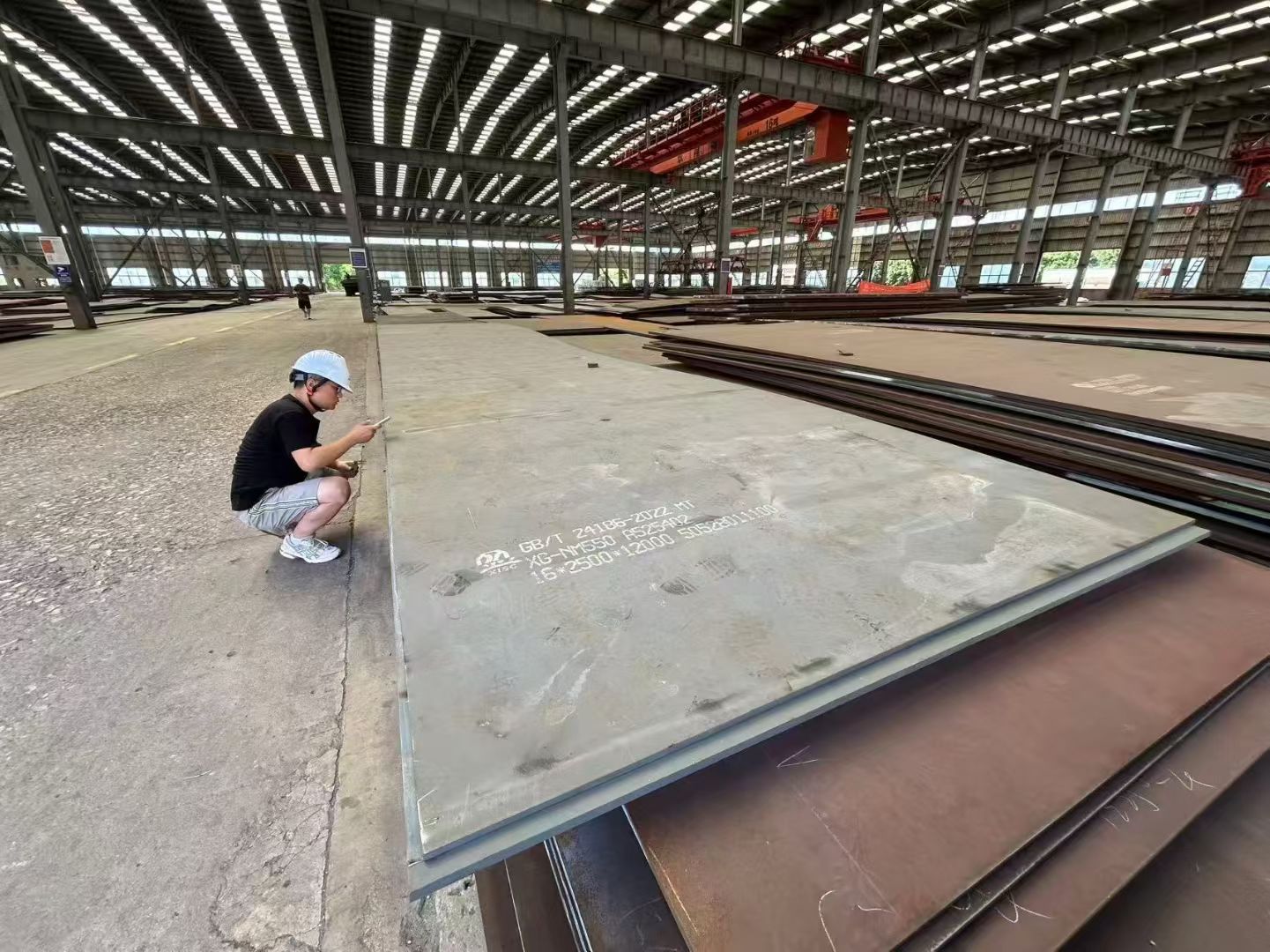
Next step: send your impact-zone drawing, wear mode, required grade, and MTC/hardness verification requirements to BGT Steel Plate. Review the BGT Steel Plate catalogue or visit www.bgtsteel.com for product and contact details.
Contact: Zhen.Li | Email: sales@bgtsteel.com | Tel/WhatsApp: +86 189-1230-2159 | Warehouse: Jiangyin, Wuxi City, Jiangsu Province, China.
Have Questions or Need More Details?
Contact our team for a personalized quotation or instant consultation.
Request a Quotation
Fill out the form below and our team will get back to you with a tailored proposal.
WhatsApp Direct Chat
Prefer to chat in real-time? Message us on WhatsApp for instant assistance & quick answers.
- Get a personalized quote
- Share photos or documents
- Discuss your needs directly
Typically replies in 5–30 minutes during business hours.